Bienvenue sur notre site !
Nous sommes Bevelgacom, un FAI à but non lucratif axé sur la connexion des générations. En tant que FAI, nous nous concentrons sur la préservation des technologies "rétro". Avec notre focus sur les réseaux Dial-Up et GSM, nous fournissons une connectivité pour les générations à venir et passées.
Tous nos services sont GRATUITS à utiliser ! Nous acceptons cependant les dons pour payer nos lignes téléphoniques.
En bref, une convivialité maximale pour une plus grande efficacité, tout cela vous donne l'opportunité de passer un moment agréable et constructif en notre compagnie...
Ce site web évolue constamment et est toujours en cours de développement, mais n'hésitez pas à nous envoyer toutes remarques ou commentaires que vous pourriez avoir. Notre souci est toujours de vous satisfaire.
Vous êtes un utilisateur mobile !
Notre passerelle WAP est maintenant disponible. Vous pouvez entrer 206.83.40.166 dans vos paramètres GPRS/CSD pour vous connecter au World Wide Web
Découvrez l'incroyable génialité de notre portail WAP sur wap.bevelgacom.be localement situé au cœur de l'Europe. Profitez des informations en direct en déplacement, ou profitez du contenu multimédia le plus récent.


Internet Cinema Loop
w/ Open Secret, Mawena Yehouessi, 0nty, Redacted Cut, Aemmonia, Eliska Jahelkova, Carmen Lin, Machine Yearning
This is a chumbox. It is a variation on the banner ad which takes the form of a grid of advertisements that sits at the bottom of a web page underneath the main content. It can be found on the sites of many leading publishers, including nymag.com, dailymail.co.uk, usatoday.com, and theawl.com (where it was “an experiment that has since ended.”)
The chumboxes were placed there by one of several chumvendors — Taboola, Outbrain, RevContent, Adblade, and my favorite, Content.ad — who design them to seamlessly slip into a particular design convention established early within the publishing web, a grid of links to appealing, perhaps-related content at the bottom of the content you intentionally came to consume.
This thread blew the fuck up. So here’s a no-bullshit breakdown of all the projects and ideas y’all dropped, so it’s easier to digest than a 300-reply tech rave. But yo—don’t let the thread die. Keep sharing, building, prepping.
Some of my personal favs?
📦 Internet in a Box – Doesn’t fix comms but is clutch for info sharing when it all goes to hell.
📡 Cantenna – Because it's cheap, DIY, and let’s be real, it’s fucking funny.
🎛 INTERNET BLACKOUT SURVIVAL: DIY COMMS FOR WHEN SHIT GOES DARK
🔌 1. Mesh Networks
Local WiFi/radio nodes talk directly.
Tools: Meshtastic, People’s Open WiFi, Reticulum
Good for: cities, tight communities.
📡 2. Ham & Packet Radio
Long-distance, text/image data over radio.
Gear: Baofeng, Quansheng UV-K5
Apps: AndFLMsg, Rattlegram
Learn: IAF Radio Guide
🔐 3. Secure Scuttlebutt & Briar
Off-grid social media & messaging via USB/Bluetooth.
Sites: scuttlebutt.nz, briarproject.org
📦 4. Internet in a Box
Local, offline servers with Wikipedia, books, and more.
Site: internet-in-a-box.org
🧠 5. Reticulum Network Stack
Encrypted, multi-channel, async networking protocol.
Site: reticulum.network
🛰 6. Old-School Hacks
📻 AM/SW radios
📡 Long-range WiFi with cantennas
🗺 Paper maps, encyclopedias, zines
🐌 Sneakernet (USB drops, printouts)
🤝 7. Internet Resiliency Clubs
Community organizing for tech survival.
Start one: bowshock.nl/irc
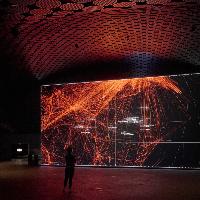
Emerald Black Latency is a project that takes the Medusa Submarine Cable System as a starting point to explore the representation and material dimension of data circulation on the internet.
The Medusa Submarine Cable System is a telecommunications infrastructure consisting of an 8,700 km underwater fibre optic cable, planned for 2026, designed to improve connectivity in the Mediterranean and link Europe with North Africa. This network enables high bandwidth, supporting growing internet traffic and facilitating data transmission. Currently, submarine cables support 98% of international internet traffic.
The project takes as its reference a 7 km stretch between the coastline of Sant Adrià del Besòs (Barcelona), where one of the landing points is located, and the Balearic Sea. This segment, documented in official reports, is reproduced on Google's global map, incorporating studio-generated images that can be viewed in street view mode. Through this process, a crossover between reality and fiction is created, simulating the impossible experience of walking along a fibre optic cable, which can be less than 1 mm thick.
Like the mythological figure of Medusa, whose face could only be seen through her reflection, the interior of the Medusa cable can only be perceived through its representation. The project thus operates at the intersection between the material and the virtual, the real and the fictitious.
You want to order from a local restaurant, but you need to download a third-party delivery app, even though you plan to pick it up yourself. The prices and menu on the app are different to what you saw in the window. When you download a second app the prices are different again. You ring the restaurant directly and it says the number is no longer in service. You go to the restaurant and order in person. You mention that their website has the wrong number and the woman behind the counter says they have to contact the company who designed the site for changes, which will cost them, but most people just order through an app anyway.
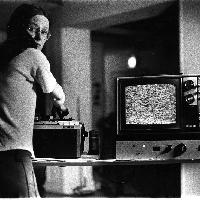
I recently posted the table of contents and a chronological list of network entries that will appear in Other Networks: A Radical Technology Sourcebook. As I try to make clear in the introduction, most entries also include examples of experiments with or on these networks because we often don’t know just how compelling a given network can be until we see artists exploring its limits and possibilities. Not surprisingly, however, just as we rarely understand how networks actually work, from the moment we send to the moment we receive, we also rarely attend to the underlying workings of media art. Stories abound of how, for example, artists from the 1970s and 1980s plugged this into that which resulted in certain fascinating outputs; but details are often frustratingly lacking or altogether absent on how the connections took place, even when the ‘how’ is exactly the point. To that end, I have also tried to include network diagrams and technical details for these experiments wherever possible.

document and experiment with networks outside of what’s now called “the internet.” We are invested in digging up alternative and forgotten networks so that we can reimagine the future of the internet as the future of networks.
diagram.website: an incomplete map to regions of the handmade, personal, indie internet
he internet used to be ✨fun✨
I’ve been meaning to write some kind of Important Thinkpiece™ on the glory days of the early internet, but every time I sit down to do it, I find another, better piece that someone else has already written. So for now, here’s a collection of articles that to some degree answer the question “Why have a personal website?” with “Because it’s fun, and the internet used to be fun.”
If you’ve written something that feels like it belongs here—especially if your voice is one that’s frequently underrepresented—I’d be interested to read it! Holler at me via email (kwon at fastmail.com), or on Mastodon (mastodon.social/@rjkwon).

"Unless they have a very unique relationship with their investors, Ello will inevitably be pushed towards profitability and an exit, even if it compromises their current values. Sometimes, this push comes subtly in the form of advice and questions in emails, phone calls, and chats over coffee. Sometimes, as more direct pressure from the board. (FreshTracks’ Managing Director sits on their board.) Or, if things go bad, by replacing the founders." which is exactly what happened
People. It's been swell. This page has been on the net since 1996. Really. It's time to move on.
Remember when this was geocities?
Remember when "blink" was a cool thing to have on your webpage?
Remember when colleges/universities used Telnet as their web interface?
Remember when "IM" and "AOL" were so much cooler than Compuserve and Prodigy?
Remember mIRC, IRC chat and ICQ?
Remember when Altavista and Netscape ruled?
Remember life before Google?
Remember your first spam -- you know, getting a friend of a friend's FWD? Yeah. That and more. Buh Bye. 1
As part of a new report on digital advertising as a security threat published today by @johnnyryan and me (https://www.iccl.ie/wp-content/uploads/2023/11/Europes-hidden-security-crisis.pdf), and previously unreported:
We reveal 'Patternz', a global mass surveillance system that harvests digital advertising data on behalf of 'national security agencies'.
Patternz is operated by a company based in Israel and/or Singapore. It claims to collect data about 5 billion users from 87 ad exchanges and SSPs via 6 data centers around the world.


TV news and national newspapers should be at the top of the attention economy because they have the highest production value, ostensibly the most resources, and theoretically the widest reach. And if that were all true, these outlets should have no problem competing with, say, random teenagers on TikTok using a text-to-speech function and random photos they found on Twitter to incorrectly explain what vinyl chloride does when you burn it. But news outlets can’t churn out content that fast because even the most well-funded state-of-the-art newsrooms in the world — which none of these are anymore thanks to absolutely gutted advertising markets — can still only operate as fast as it takes human beings and institutions to respond (if they actually want to report out a complete story). And, so, a whole lot of people, especially young people who weren’t around for the chaotic move 15 years ago from a television-led media environment to a deeply flawed digital one — find it very easy to assume there’s some kind of large-scale conspiracy to not cover the literal mushroom cloud of toxic gas hovering over the midwest right now. Because what else could explain why CNN isn’t faster, better, and more interesting than TikTok?
Politics has in recent decades entered an era of intense polarization. Explanations have implicated digital media, with the so-called echo chamber remaining a dominant causal hypothesis despite growing challenge by empirical evidence. This paper suggests that this mounting evidence provides not only reason to reject the echo chamber hypothesis but also the foundation for an alternative causal mechanism. To propose such a mechanism , the paper draws on the literatures on affective polarization, digital media, and opinion dynamics. From the affective polarization literature, we follow the move from seeing polarization as diverging issue positions to rooted in sorting: an alignment of differences which is effectively dividing the electorate into two increasingly homogeneous megaparties. To explain the rise in sorting, the paper draws on opinion dynamics and digital media research to present a model which essentially turns the echo chamber on its head: it is not isolation from opposing views that drives polarization but precisely the fact that digital media bring us to interact outside our local bubble. When individuals interact locally, the outcome is a stable plural patchwork of cross-cutting conflicts. By encouraging nonlocal interaction, digital media drive an alignment of conflicts along partisan lines, thus effacing the counterbalancing effects of local heterogeneity. The result is polarization, even if individual interaction leads to convergence. The model thus suggests that digital media polarize through partisan sorting, creating a maelstrom in which more and more identities, beliefs, and cultural preferences become drawn into an all-encompassing societal division.
"ARPA had funded a few schools to begin the early stages of Internet, but most schools didn't have that," said Ramm, who worked with the students who developed Usenet. "Usenet was a pioneering effort because it allowed anybody to connect and participate in communications."
I should not know who Pete Buttigieg is. In a just world, the name Bari Weiss would mean as much to me as Nordic runes. This goes for people who actually might read Nordic runes too. No Swede deserves to be burdened with this knowledge. No Brazilian should have to regularly encounter the phrase “Dimes Square.” To the rest of the vast and varied world, My Pillow Guy and Papa John should be NPCs from a Nintendo DS Zelda title, not men of flesh and bone, pillow and pizza. Ted Cruz should be the name of an Italian pornstar in a Love Boat porn parody. Instead, I’m cursed to know that he is a senator from Texas who once stood next to a butter sculpture of a dairy cow and declared that his daughter’s first words were “I like butter.”
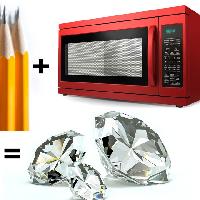

It Wasn’t Just the Trolls: Early Internet Culture, “Fun,” and the Fires of Exclusionary Laughter

We are partnering with Are.na, a platform for creative thinking and collaborative research, to co-organize a Library of Practical and Conceptual Resources. The Library is intended to create space for healthy reflection on our online habits, as well as to spur creative thought and action