241 private links

ecoEDA is a python-based tool that integrates with KiCad. It is designed to provide suggestions of recycled components whenever you add a new symbol to your schematic.

For at least 45 years, oil company scientists have been privately warning executives that burning fossil fuels would lead to catastrophic storms. Their startlingly accurate warnings are detailed in internal documents and publicly-released films obtained by the Center for Climate Integrity and Dutch news site De Correspondent.
Here’s some of what Big Oil knew about the connection between fossil fuels and catastrophic weather, and when they knew it:
Johnson. A Plane Man, is a found narrative game produced with photos of the Ryanair Boeing 737 Safety Instructions panel.

We need new networks that genuinely work better, not only for indie-web people or tech people or other outliers, but for all of us working toward collective survival. And I don't think we'll get them by just trying harder—or by swapping in new infrastructure toward the same old ends, or by building reflexively against the cartoon versions of old networks, and definitely not by trying to scold people into make more ethical social networking choices.

In the findings, we get into…
Why we think the fediverse’s structure can allow for particularly humane and high-context moderation—and which of the cultural, technical, and financial gaps that our participants identified must be filled before the network can achieve its potential.
The interrelated governance configurations that make a server more or less manageable, and the different ways servers in our sample approached those configurations to serve their various communities.
The biggest gaps and annoyances in available governance tooling—spoiler, it’s mostly moderation stuff, but it also includes some fascinating things related to shared/coalitional moderation and better communication between servers.
What kinds of future threats are most on server operators’ minds, and which things they’re not particularly concerned about.
The things that keep volunteer server runners on the fediverse, give them hope, and make them feel excited about possible futures.
The limited oversight and rushed nature of this project have allowed xAI to skirt environmental rules, which could impact the surrounding communities. For instance, the company’s on-site methane gas generators currently don’t have permits.

Rather than having honest convos on AI, people have been sold the idea that the tech is inevitable, said Maywa Montenegro, an assistant professor at UC Santa Cruz.
Because of that, she wrote an AI policy to her class, and got some interesting responses
see also https://docs.google.com/document/u/1/d/1t4Qjpu5aqjh0TyQfTm8I_-UfrV4vWnBF4ENwyud3aGQ/pub

Allen also claims that people are “stealing” his work, which is funny since the people behind the AI tools he used to create the work have been accused of the exact same thing. “The Copyright Office’s refusal to register Theatre D’Opera Spatial has put me in a terrible position, with no recourse against others who are blatantly and repeatedly stealing my work without compensation or credit,” Allen said.



“The energy industry cannot be the reason China or Russia beats us in AI,” gawd

The signatories demand “quick and clear decisions under EU data regulations that enable European data to be used in AI training”. That’s the whole thing. It’s about trying to get the EU to let big companies scrape everyone’s data and work for their models. And they want the EU to sign off on it.
This letter goes explicitly against EU interests, it goes against the interests of EU citizens and everyone living in the EU. Nobody who cares about lofty “European Values” should sign this. Let Meta spend their own money on lobbying against AI regulation. Don’t be their gullible pawns.
Generative AI has polluted the data
I don't think anyone has reliable information about post-2021 language usage by humans.

It's been interesting how the prefix cyber has drifted in meaning over the years. Let's explore together.
I wrote two thirds of this article and then I discovered Annalee Newitz was way ahead of me and wrote about the same thing two years ago. Since my article has different details I decided to finish it and put it on my blog after all. There's plenty of room in cyberspace. But read Annalee Newitz's article too!

Moka is a small wiki quine self contained in a single html file. You can store this file on your computer, host it on a server, or put it on a USB stick. It doesn't have any dependency. You just need a browser that can run JavaScript to run it. You don't need internet either. Everything happens offline and stays in your html file.

Nodezator is a multi-purpose node editor for the Python programming language. It takes your functions (or other callables) and turns them into Python nodes, allowing you to create and execute complex node layouts and even export them back as Python code.

⍼
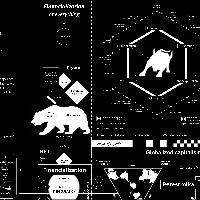
Calculating Empires
A Genealogy of Technology and Power Since 1500
Kate Crawford and Vladan Joler
(2023)
Like Freitag or Grünbag
The concept “artificial intelligence” is a loaded terminology, situated in a
very specific territory and sparking a very particular imaginary of possible futures.
Silicon Valley and Hollywood’s fast and metallic futures, which are incompatible
with values, desires, and dreams of decolonial, antiracist, and transfeminist visions
of being on this planet. We seek to explore and expose the limitations of applying the
term AI to feminist technological practices and propose alternative epistemologies
and approaches to develop decolonial feminist tech. This paper is an epistemologi-
cal, historical, political, and creative exercise to expose the harmful Western-cente-
red logics and imaginaries that are guiding tech development towards technologies
of war, extractivism and domination and seek alternative terminologies that serve
5
us as tools to help envision systems guided by social-environmental justice and
feminist principles, technologies of life and del buen vivir. To achieve such goal, we
travel in the history of western science fiction to untangle colonial and patriarchal
imaginaries that are guiding mainstream tech development; start to decolonize our
imaginaries by departing from a map of everything that is left behind when we use
the terminology “artificial intelligence”, and from a brief immersion in biology and
ecology studies, focused on mycology, soil studies, and a symbiotic approach to
evolution, using radical imagination and speculative narratives, we propose con-
cepts to inspire tech development that can be regenerative and in symbiosis with
the Earth, all its beings, temporalities and rhythms.