
Peer to Peer tunnels



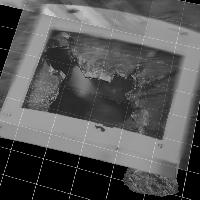
The original Luddites—a movement of early nineteenth-century English weavers, who infamously smashed the new machines that transformed a skilled and well remunerated livelihood into low-grade piecework performed by children—did not oppose technology in its entirety. Indeed, as skilled craftspeople, they were adept users of it. Rather, they fought against what they referred to as “Machinery hurtful to Commonality,” which sought to break up the autonomy and social power that underpinned entire vibrant communities, so that a new class of factory owners might benefit.

Robin Sloan: I send a lot of stuff through the mail. Our olive oil company would not run without it. I couldn’t pay so many of my bills if we couldn’t send things so reliably and economically through the United States Postal Service. And of course I send out all these zines to people, too. The internet gets a lot of credit as a sort of utopian network … and the internet is cool … but I think actually maybe the USPS is the utopian network, and has been all along. I often think, when I put a stamp on something, or even when I print out my postage and it’s like six bucks — which is not nothing — wow, they’ll take it anywhere. And it will get there. You’re like “how is that possible?”
Antistatic: We all live in cities, but if you live down a country road it’ll still get there.
Robin Sloan: Exactly. That’s why it’s important. That’s why the USPS is utopian. And the other [delivery companies] are not, ‘cause they say “no, no, no, we don’t really mess with Sloan up there on old Skeleton Hill”. But USPS is like “I guess we gotta go there.”
Antistatic: “We’ll deliver to that ghost.”
Robin Sloan: Exactly.

Repairing Repair
Repair is a noble cause, but it is inseparably fraught with political anxieties and machinations. Because the idea of repair is often popularly perceived as an ethically grounded panacea, we frequently miss seeing how it dovetails with our understandings of another problematic concept: injustice. Insofar as we want to operationalize it as a tool for social good, it is important to understand “repair” in its turbulences, fluidities, and anomalies.
Imagine a city — full of rich heritage, economic potential, and informal settlements — struck by a powerful earthquake. The city is decimated. In the aftermath, administrators, policymakers, and civil society feel it is their moral duty to repair their city. Yet after much contentious debate, there is no consensus as to how to rebuild.
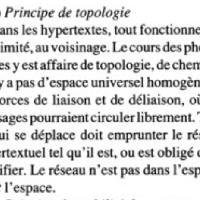
Comment quitter une forêt lorsque l’on est un arbre ?

OpenAI has published “A Student’s Guide to Writing with ChatGPT”. In this article, I review their advice and offer counterpoints, as a university researcher and teacher. After addressing each of OpenAI’s 12 suggestions, I conclude by mentioning the ethical, cognitive and environmental issues that all students should be aware of before deciding to use or not use ChatGPT. I also answer some of the more critical feedback at the end of the post.


Remember AOL, AIM, ICQ, Yahoo, even Q-Link? We do too. That's why we're bringing them back.
Let's go back to the basics - when you hoped your modem would connect to the internet, when you changed your away message to tease someone, when you used to chat endlessly with people from all around the world. It's back, baby!


myst-like japanese game on PS1





おすすめ!
DEKASAN
Extra large sandwichesin Osaka🍳
Their “egg sandwich(480yen)” uses 4 eggs fluffed into merengue and is filled with egg salad!
The yolks are seasoned & flavored to make a garlicky sauce, and spread on top before rebaking!
I loved both the fluffy texture and rich creamy texture of the eggs combined with the perfectly crunchy bread!
They also have a rare steak sandwich (2600yen) which is amazing too, but if you’re looking for a cheaper choice, try their egg sandwich!
Highly recommended!
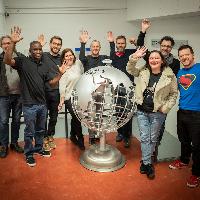
Kugelmugel, officially the Republic of Kugelmugel (German: Republik Kugelmugel), is a spherical art object located in Vienna, Austria.
It came about as the result of the artist Edwin Lipburger constructing the 8 square meter diameter spherical object without permissions from the authorities in Austria. After the dispute between the artist and authorities, the artist declared it a micronation, and it was eventually granted asylum by the then-mayor Helmut Zilk in Vienna where it is housed in the Prater park.
The 'Republic' is currently administered by Linda Treiber.

A privacy-first, no-nonsense, super-fast blogging platform
No trackers, no javascript, no stylesheets. Just your words.
Sign up Log in Discover
This is a blogging platform where words matter most.
Shun the bloat of the current web, embrace the bear necessities.
Looks great on any device
Tiny (~2.7kb), optimized, and awesome pages
No trackers, ads, or scripts
Seconds to sign up
Connect your custom domain
Free themes
RSS & Atom feeds
Built to last forever*
A Raspberry Pi distribution to display one webpage in full screen. It includes Chromium out of the box and the scripts necessary to load it at boot. This repository contains the source script to generate the distribution out of an existing Raspbian distro image.
FullPageOS started as a fork from OctoPi, but then joined the distros that use CustomPiOS.

ecoEDA is a python-based tool that integrates with KiCad. It is designed to provide suggestions of recycled components whenever you add a new symbol to your schematic.

For at least 45 years, oil company scientists have been privately warning executives that burning fossil fuels would lead to catastrophic storms. Their startlingly accurate warnings are detailed in internal documents and publicly-released films obtained by the Center for Climate Integrity and Dutch news site De Correspondent.
Here’s some of what Big Oil knew about the connection between fossil fuels and catastrophic weather, and when they knew it:
Johnson. A Plane Man, is a found narrative game produced with photos of the Ryanair Boeing 737 Safety Instructions panel.

We need new networks that genuinely work better, not only for indie-web people or tech people or other outliers, but for all of us working toward collective survival. And I don't think we'll get them by just trying harder—or by swapping in new infrastructure toward the same old ends, or by building reflexively against the cartoon versions of old networks, and definitely not by trying to scold people into make more ethical social networking choices.