241 private links




lol

Teranoptia is a typeface without letters, a peculiar contraption that allows you to imagine chimeric creatures just by typing letters with your keyboard. Its design has been inspired by the Bayeux Tapestry and by medieval illustrations, as well as by children's books. You can use it to create border ornaments, to daydream about monsters or just to spice your layouts with marginalia.
Typeknitting is a methodical plugin for typographic knitting. It explores the graphic potential of various knitting techniques, from Fair Isle, slip-stitch, and shadow knitting, to modular patchwork knitting.
Opening a dialogue between digital typography and the analog craft of knitting, Typeknitting turns to knitters working with text, and visual creators going physical. Typeknitting activities include Workshops, Patterns, Prototypes, Manuals, Books and hand or machine knit Editions.
You want to order from a local restaurant, but you need to download a third-party delivery app, even though you plan to pick it up yourself. The prices and menu on the app are different to what you saw in the window. When you download a second app the prices are different again. You ring the restaurant directly and it says the number is no longer in service. You go to the restaurant and order in person. You mention that their website has the wrong number and the woman behind the counter says they have to contact the company who designed the site for changes, which will cost them, but most people just order through an app anyway.
Incomplete List of Mistakes in the Design of CSS
That should be corrected if anyone invents a time machine. :P




lol
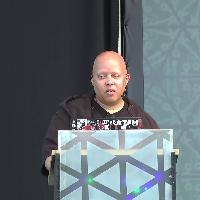
This talk will investigate how the concept of private property has fundamentally altered our behavior towards the environment. We will investigate how an alternative ontology of electronic waste is needed and argue why dumpster diving, hacking and reverse engineering abandoned electronics is more relevant than ever to tackle this problem.
Within the discourse that surrounds the global rise in electronic waste, only a select range of subjects receive attention from the public - international relations, global waste management strategies and corporate greenwashing rhetoric that emphasizes a ‘circular’ economy. Although the legitimacy of these strategies can be debated, they fail to address the root of the problem. Following the pervasive concept of private property and how it has infiltrated the ways in which we think about ourselves, our relationships between each other and the environment, we will arrive at how this concept has solidified itself within the ontological frameworks we use to make sense of waste and electronic waste in particular. We will discuss how, when we get rid of the concept of private property (and subsequently the concept of waste), we can reimagine what abandoned electronics mean to us and how we can best address the incessant pressure from manufacturers to treat them as expendable, throw-away objects. We will discuss how collective dumpster diving, hacking and reverse engineering abandoned electronics might be a possible solution and present free and open source tools that could aid us in the process.
Betula is a free federated self-hosted single-user bookmarking software for the independent web. Use it to organize references or maintain a linklog.
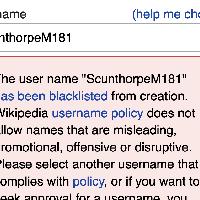
The Scunthorpe problem is the unintentional blocking of online content by a spam filter or search engine because their text contains a string (or substring) of letters that appear to have an obscene or otherwise unacceptable meaning. Names, abbreviations, and technical terms are most often cited as being affected by the issue.
QWERTY keyboard is widely used for information processing nowadays
in Japan, United States, and other countries. And the most frequently asked
question about the keyboard is: “Why are the letters of the keyboard arranged
the way they are?” Several papers in the field of information processing answer
the question like this: “To slow down the operator.” It’s nonsense.
In this paper we reveal the prehistory of QWERTY keyboard along the his-
tory of telegraph apparatus: Morse, Hughes-Phelps, and Teletype. The early
keyboard of Type-Writer was derived from Hughes-Phelps Printing Telegraph,
and it was developed for Morse receivers. The keyboard arrangement very
often changed during the development, and accidentally grew into QWERTY
among the different requirements. QWERTY was adopted by Teletype in the
1910’s, and Teletype was widely used as a computer terminal later.

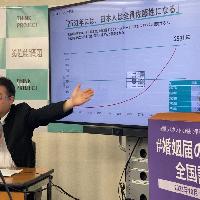
"Yoshida determined that by 2531, only 7.96% would be named Sato under the selective separate surname system, but the Sato surname would still take over by the year 3310.
At the same time, if Japan's population decline continues at the current speed, there will be only 22 people left in 3310."
Free culture licensing is its own special bugbear. While pioneers like the GPL, ISC, and even WTFPL have served their purpose, with the advent of source-available but non-libre licenses and ensnaring of public works by corporate interests, it's time we take a new tack.
To that end, I propose that new projects choose a license from what I call the "Poison Pill" class. These are licenses that are so nonsensical that any entity with an actual legal department won't use them out of terror; however, normal, every day people have no such strict adherence to legalese and can enjoy them as the art they are in themselves. Below, I've included 40 such licenses with easy-to-use template variables so you can adapt them to your project:

3D DOM viewer, copy-paste this into your console to visualise the DOM topographically.
The repression that environmental activists who use peaceful civil disobedience are currently facing in Europe is a major threat to democracy and human rights. The environmental emergency that we are collectively facing, and that scientists have been documenting for decades, cannot be addressed if those raising the alarm and demanding action are criminalized for it. The only legitimate response to peaceful environmental activism and civil disobedience at this point is that the authorities, the media, and the public realize how essential it is for us all to listen to what environmental defenders have to say.