
SPARQL Anything is an open source tool that lets you use SPARQL to query data in a long list of popular formats: XML, JSON, CSV, HTML, Excel, Text, Binary, EXIF, File System, Zip/Tar, Markdown, YAML, Bibtex, DOCx, and PPTx. It has a lot of great documentation and features, but I’ll start here with an example of it in action.




"Les personnes dyslexiques ou ayant des difficultés de lecture sont fréquemment citées quand on parle d’écriture inclusive : pourtant, les difficultés viendraient surtout d’un manque d’habitude envers ces usages de la langue, il y a besoin d’un temps d’adaptation. Pour les personnes aveugles ou mal voyantes également, ce sont les systèmes de lecture orale des textes qui devraient être modifiés afin de pouvoir correctement lire des propos inclusifs", poursuit Laurence Rosier.
@aparrish@friend.camp
i was about to spend good money on a logic analyzer when i found this https://github.com/dotcypress/ula and flashed a spare pi pico with it, added in a level shifter, and now i'm getting pretty good data on gameboy memory timing

‘Our Country Is Better Than This,’ Says Country That Has Never Been Better Than This


The Centre supports practice-based interdisciplinary research, fostering new approaches and strategies to ecological issues.

Ambient sounds for focus and calm.

Don’t let pro-car bias kill good policy

On a Facebook group for swapping unwanted items near Boston, a user looking for specific items received an offer of a “gently used” Canon camera and an “almost-new portable air conditioning unit that I never ended up using.”
Both of these responses were lies. That child does not exist and neither do the camera or air conditioner. The answers came from an artificial intelligence chatbot.
According to a Meta help page, Meta AI will respond to a post in a group if someone explicitly tags it or if someone “asks a question in a post and no one responds within an hour.”

Jack Dorsey has been supporting alternatives to Twitter, the social-media platform he cofounded.
Dorsey gave $10 million to a project called Nostr and 14 bitcoins to Nostr's anonymous founder.
The founder is a Brazilian man who appears to be a big fan of a fascist conspiracy theorist.
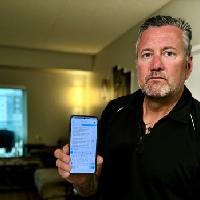
Before phoning the number, Gaudreau did a search in Facebook Messenger to find out whether it was legitimate.
The answer he got in Messenger from the "Meta AI" artificial intelligence search tool was that the phone number he found, 1-844-457-0520, was "indeed a legitimate Facebook support number."


Red Lentil Pancakes
100g dried red lentils
50g basmati rice (or other grains)
10g ginger
1/2 tsp cumin seeds
3/4 tsp salt
1/2 tsp Kashmiri chilli powder
1 tbsp oil

In contrast with sneakernets which only use physically transported storage devices, the sidenet also includes the internet and other established networks.

“The peace activists are war activists,” Karp insisted. “We are the peace activists.”



lol

Teranoptia is a typeface without letters, a peculiar contraption that allows you to imagine chimeric creatures just by typing letters with your keyboard. Its design has been inspired by the Bayeux Tapestry and by medieval illustrations, as well as by children's books. You can use it to create border ornaments, to daydream about monsters or just to spice your layouts with marginalia.
Typeknitting is a methodical plugin for typographic knitting. It explores the graphic potential of various knitting techniques, from Fair Isle, slip-stitch, and shadow knitting, to modular patchwork knitting.
Opening a dialogue between digital typography and the analog craft of knitting, Typeknitting turns to knitters working with text, and visual creators going physical. Typeknitting activities include Workshops, Patterns, Prototypes, Manuals, Books and hand or machine knit Editions.
You want to order from a local restaurant, but you need to download a third-party delivery app, even though you plan to pick it up yourself. The prices and menu on the app are different to what you saw in the window. When you download a second app the prices are different again. You ring the restaurant directly and it says the number is no longer in service. You go to the restaurant and order in person. You mention that their website has the wrong number and the woman behind the counter says they have to contact the company who designed the site for changes, which will cost them, but most people just order through an app anyway.