
Having created time-based, moving graphics jewels since 1975, utilizing LCD technology, I set as my next goal to create truly cybernetic jewelry. This meant a significant portion of the esthetic entity comprising the jewel would reside in a software program, executing in real time on a microcumputer residing in the jewel and contolling an output device—in this case an LCD panel with custom graphics. The patterns in this LCD would move and change under software control. Importantly, this meant that competely different looks could be obtained without changing the hardware in any way, something never before possible. Additionally the software could make decisions about how to control its output, based on internal and external monitoring of its environment, adding a component of "intelligence" not to be found without using computers. For the first time ever, jewelry objects could be endowed with simple, but real, aspects of awareness and volition- the first seeds of AI jewlery.

Veejay is a visual instrument
Veejay is a visual instrument and realtime video sampler.
With veejay, you can play the video like you would play a piano.
While playing, you can record the resulting video directly to disk (video sampling), all effects are realtime and optimized for use on modern processors, Veejay likes the sound of your video's as much as their images: sound is kept in sync ( pitched when needed - trickplay) and delivered to JACK for possible further processing.
You can cluster to allow a number of machines to work together over the network (uncompressed streaming, veejay chaining) And much more...
The engine is historically based upon mjpegtools's lavplay and processes all video in YUV planar It performs at its best, currently with MJPEG AVI (through ffmpeg) or one of veejay's internal formats. Veejay is built upon a servent architecture.



Shawl is a wrapper for running arbitrary programs as Windows services, written in Rust. It handles the Windows service API for you so that your program only needs to respond to ctrl-C/SIGINT. If you're creating a project that needs to run as a service, simply bundle Shawl with your project, set it as the entry point, and pass the command to run via CLI.
Heavenchord - To The Antares

Lee’s witnessing of the underground switchboard prompted an idea: and for that he needed access to a computer network. Later he took a position as an engineer at Resource One, a radical idea for a people’s computer center at Project One, a DIY commune of artists, technologists, musicians, psychologists, alternative schools, darkroom and community radio. There, Lee worked on a team to build Community Memory, the first public community bulletin board, predating the web and social media by decades.

in a moment of utter insanity, i realized that the creators of Portal did something very special for the Macintosh Plus: they made the game a f'ing BOOTER. it was never meant to be run from within the OS. you just inserted the diskette, turned on your Plus. the entire game is an operating system of its own, executing instructions from the CPU and ROM. this isn't anything new for C64 or Apple // users, but for the Macintosh it was practically unheard of. they replicated the Macintosh System 2 gui perfectly, just for the game.
the Macintosh port is still gorgeous today: a mouse-driven point'n'click UI with high-res 1-bit icons, and high-res text. it feels good in a way that none of the other versions (C64, DOS, Amiga) do.
but what stands out to me, nearly 40 years after its release, is that this is a hypertext game through and through. the story unfolds as you click around, wandering from computer network to computer network, reading documents and piecing together how the Earth became abandoned hundreds of year ago.
as far as I know, Portal's creators (Rob Swigart and Brad Fregger) were never credited for producing a very early Hypertext game. Portal predates Hypercard by an entire year.
recorded some gameplay in mini vMac for posterity. as far as I know, this is the only footage of Portal for the Macintosh that has ever existed on the web.
he internet used to be ✨fun✨
I’ve been meaning to write some kind of Important Thinkpiece™ on the glory days of the early internet, but every time I sit down to do it, I find another, better piece that someone else has already written. So for now, here’s a collection of articles that to some degree answer the question “Why have a personal website?” with “Because it’s fun, and the internet used to be fun.”
If you’ve written something that feels like it belongs here—especially if your voice is one that’s frequently underrepresented—I’d be interested to read it! Holler at me via email (kwon at fastmail.com), or on Mastodon (mastodon.social/@rjkwon).

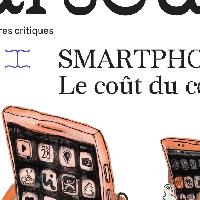
Au cours des dernières années, la messagerie instantanée est devenue un outil incontournable. Avec la généralisation de la 4G, les applications telles que WhatsApp, Messenger, Signal ou encore Telegram ont, pour de nombreuses personnes, remplacé les SMS et les MMS pour envoyer des messages courts ou transportant des contenus multimédias. Par ailleurs, la messagerie instantanée est aussi désormais utilisée dans des contextes variés, professionnels, scolaires, universitaires ou associatifs, en offrant, par sa capacité à assurer des échanges synchrones, des possibilités d’interactions plus immédiates que l’e-mail.

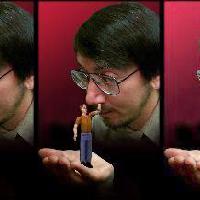
Will Wright, the designer of SimCity, SimEarth, SimAnt, and other popular games from Maxis, gave a talk at Terry Winograd’s user interface class at Stanford, in 1996 (before the release of The Sims in 2000).
At the end of the talk, he demonstrated an early version of The Sims, called Dollhouse at the time. I attended the talk and took notes, which this article elaborates on.

Posthuman - Homecoming
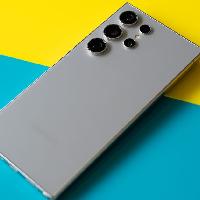
There was a very nice video by Marques Brownlee last year on the moon picture. Everyone was like, ‘Is it fake? Is it not fake?’ There was a debate around what constitutes a real picture. And actually, there is no such thing as a real picture. As soon as you have sensors to capture something, you reproduce [what you’re seeing], and it doesn’t mean anything. There is no real picture. You can try to define a real picture by saying, ‘I took that picture’, but if you used AI to optimize the zoom, the autofocus, the scene – is it real? Or is it all filters? There is no real picture, full stop.

Everything
Locate files and folders by name instantly.
Everything
Small installation file

Clean and simple user interface

Quick filename indexing

Quick searching

Minimal resource usage

Real-time updating

More...

2017
Beaker supported the ability to "fork" p2p websites, so an indie social network called Rotonde briefly emerged on it where you created accounts by forking existing user sites. Simultaneously, the Beaker team created a Twitter clone on the tech called Fritter.
The semantic search engine of over 25,000 CD-ROMs from the Internet Archive is back:
http://DISCMASTER.TEXTFILES.COM is once again helping people discover long-lost computer history, forgotten images and music, and endless other buried treasures.