"Old’aVista, a guide to the old internet: launched in 2021, a search engine indexing early personal websites plus Yahoo directory listings from 1996 to 2003"


"Unless they have a very unique relationship with their investors, Ello will inevitably be pushed towards profitability and an exit, even if it compromises their current values. Sometimes, this push comes subtly in the form of advice and questions in emails, phone calls, and chats over coffee. Sometimes, as more direct pressure from the board. (FreshTracks’ Managing Director sits on their board.) Or, if things go bad, by replacing the founders." which is exactly what happened
People. It's been swell. This page has been on the net since 1996. Really. It's time to move on.
Remember when this was geocities?
Remember when "blink" was a cool thing to have on your webpage?
Remember when colleges/universities used Telnet as their web interface?
Remember when "IM" and "AOL" were so much cooler than Compuserve and Prodigy?
Remember mIRC, IRC chat and ICQ?
Remember when Altavista and Netscape ruled?
Remember life before Google?
Remember your first spam -- you know, getting a friend of a friend's FWD? Yeah. That and more. Buh Bye. 1



A command-line and offline-first smolnet browser/feed reader for Gemini, Gopher, Spartan and Web by Ploum.
The goal of Offpunk is to be able to synchronise your content once (a day, a week, a month) and then browse/organise it while staying disconnected.

P2P alternative to Discord etc
What protocol do peers connect with?
Members of a Quiet community (analogous to a Slack organization or a Discord "server") use libp2p/IPFS to connect to each other, over Tor, in an insular network for a specific community.

minimalistic rss aggregator
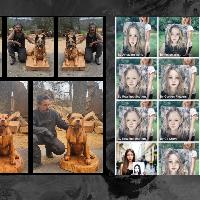
The once-prophesized future where cheap, AI-generated trash content floods out the hard work of real humans is already here, and is already taking over Facebook.

"Advanced intelligence from AI should be embraced, not feared. We should speed up AI development, not slow it down. We should move fast and fix things while we still can. Fly Icarus, fly! Your Dad was wrong."
🤪

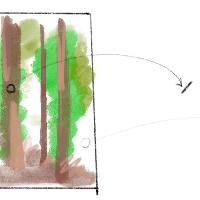
On this page, we will write code using physical tools like pencils, brushes, and paint as inspiration. While there are many great tools available, such as Procreate or Adobe Fresco, or you can simply ask AI to "paint like Van Gogh," I assure you that you can learn a lot and have fun by doing it yourself. By observing things and attempting to express them in code, you can develop your skills and perspective. The freedom to design your own tools can be an invaluable asset for your creativity.
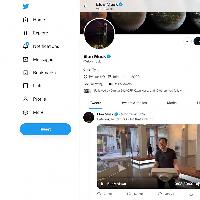
The point is, Elon Musk has been angling to become a beloved poster for a minimum of five years now. Since my brush with this want of his, the man had to buy the entire goddamn website just to win status as a poster of note, only to instantly become one for all the wrong reasons. He bought the spotlight, pointed it at himself, and almost immediately became the consensus pick for the worst user in the site’s history. It had to sting, and now everyone has seen how well he’s handling that experience:

Computational Photography
Circuit Board Art
Artificial Intelligence as a field of research and also its criticism is dominated by notions such as ‘intelligence’, ‘learning’ or ‘neuronal’. This paper discusses how the use of anthropomorphising language is fueling AI hype. AI hype involves many promises, such as that ‘AI can be creative’, or ‘AI can solve world hunger’. This hype is problematic since it covers up the negative consequences of AI use. Instead, the author proposes to use alternative terminology such as: ‘Automated Pattern Recognition’, ‘Machine Conditioning’, or ‘Weighted Network’.
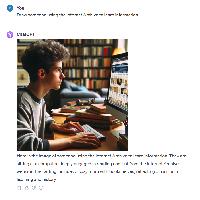
Creating an image that surpasses the current level of intensity, which already embodies a cosmic and transcendental theme, would be challenging. The current depiction includes elements such as a vortex of blinding light, mystical symbols, and a transformation into a cosmic realm, which represents a peak in visual intensity.

Practice Guide for Computer
Adapted from Ron Miller’s Advanced Improv Practice Guide
Before starting your daily practice routine, read and seriously
consider the following:
A. DAILY AFFIRMATIONS
- How fortunate I am that in this life I am one who has been allowed
to create beauty with computer. - It is my responsibility to create peace, beauty, and love with
computer.
B. I WILL BE KIND TO MYSELF - IT IS ONLY COMPUTER
- No matter my level of development in computer, how good or bad I
think I am, it is only computer and I am a beautiful person. - I will not compare myself with my colleagues. If they do computer
beautifully, I will enjoy it and be thankful and proud that I live
in fellowship with them. - There will always be someone with more abilities in computer than my
own as there will be those with less.
C. REASONS TO DO COMPUTER - To contribute to the world’s spiritual growth.
- To contribute to my own self-discovery and spiritual growth.
- To pay homage to all the great practitioners of computer, past and
present, who have added beauty to the world.
D. RID YOUR SELF OF THE FOLLOWING REASONS FOR BEING A
PRACTITIONER OF COMPUTER - To create self-esteem
- To be “hip”
- To manipulate
- To get rich or famous
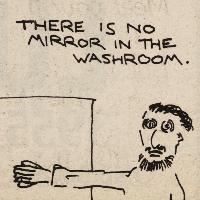
"There is no mirror in the washroom." From The Martlet, 1977.

As part of a new report on digital advertising as a security threat published today by @johnnyryan and me (https://www.iccl.ie/wp-content/uploads/2023/11/Europes-hidden-security-crisis.pdf), and previously unreported:
We reveal 'Patternz', a global mass surveillance system that harvests digital advertising data on behalf of 'national security agencies'.
Patternz is operated by a company based in Israel and/or Singapore. It claims to collect data about 5 billion users from 87 ad exchanges and SSPs via 6 data centers around the world.
Please join us for Critical AI in the Art Museum: Practices & Politics 🤖, a series of online discussions happening in October & November 2023 on Zoom hosted at ANU, all welcome 🤗.
In this moment of environmental, political and pandemic accelerated crisis, art has become increasingly entangled with the cultural logic of analytics platforms, Silicon Valley imaginaries and planetary scale computing. And yet, in the art museum, ‘the digital’ has largely been understood as a tool, rather than a cultural form with specific socio-technical affordances and politics.
Under these conditions, various AI imaginaries💭 have begun to prosper across the art museum’s operations. For the exhibitions team, AI is to be celebrated as a tool of a new artistic avant-garde 🖼; for senior managers, AI is to be championed as a talisman of the institution’s contemporary relevance 👏; for communications teams, AI promises predictive insights into audience behaviours, maximising ‘engagement’🤳; for development teams, AI offers a gateway to lucrative relationships with the tech sector🤝; for museum eductators, AI is a troubling object that demands new pedagogies and literacies 🤔.

Lauren Tousignant, Jezebel’s interim editor in chief, told 404 Media that Jezebel was told “brand safety,” the fact that advertisers don’t want to be next to the type of content Jezebel was publishing, was “one of the biggest factors” that led G/O to stop publishing the site and lay off its staff. Tousignant said that a couple of weeks ago, the ads sales team asked if it could remove Jezebel’s tagline—“Sex. Celebrity. Politics. With Teeth”—from the site.
“They took it off because they're like, let's see if this makes a huge difference,” Tousignant said. “So yeah, it was very much the problem here that no one will advertise on Jezebel because we cover sex and abortion. I know taking the tagline off was to see if the algorithm advertising would change. After it was removed one of the editorial directors was like, ‘I'm seeing an ad for J Crew for the first time ever, maybe this will be good.’”