241 private links
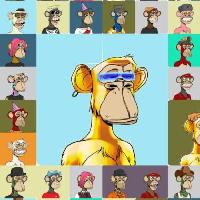
The Sotheby's auction house has been named as a defendant in a lawsuit filed by investors who regret buying Bored Ape Yacht Club NFTs that sold for highly inflated prices during the NFT craze in 2021. A Sotheby's auction duped investors by giving the Bored Ape NFTs "an air of legitimacy... to generate investors' interest and hype around the Bored Ape brand," the class-action lawsuit claims.
The boost to Bored Ape NFT prices provided by the auction "was rooted in deception," said the lawsuit filed in US District Court for the Central District of California. It wasn't revealed at the time of the auction that the buyer was the now-disgraced FTX, the lawsuit said.
"Sotheby's representations that the undisclosed buyer was a 'traditional' collector had misleadingly created the impression that the market for BAYC NFTs had crossed over to a mainstream audience," the lawsuit claimed. Lawsuit plaintiffs say that harmed investors bought the NFTs "with a reasonable expectation of profit from owning them."

"un site qui permet d’essayer une belle pelletée de distributions Linux depuis un navigateur"
Ever wanted your desktop windows to jiggle around on-beat? This Winamp plugin might be for you.
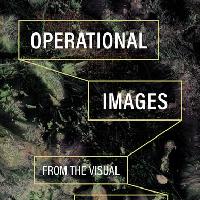
In times of turboacademia, we feel this mobiliza-
tion and desire to share the responsibility to look
around and underneath digital infrastructures. Such a
responsibility involves resisting compliance with in-
formatics of domination in order to make space for the
praxis of ongoing transdisciplinary critique. Part of
this is trying and combining space-times, using on-
or off-line tools, developing methods and semiotic-
material tricks in order to organize situated formats.
These trove of tactics are based on references that
come from worlds beyond the webinar-Oh-sphere, and
they engage forms of teachings that can assist the on-
going mobilization.
Curated as an anti-solutionist collection, the
Catalog of Formats is an attempt to document the
plausibility of such practices and to encourage af-
firmative counter-forces. The Catalog may work as a
device for trying emergent formats and hopefully
destabilizing too comfortable articulations of online
gatherings. It is an invitation to do so while enjoying
the rigourous, engaging and creative formats for and
by communities themselves.
The modes of using the Catalog are as diverse as
the types of gatherings it might be useful for. This is
why we do not necessarily recommend reading it in a
linear fashion, but to try out oblique and fragmented
approaches. We defined nine vectors as possible lines
of consideration for anyone interested in setting up
an online meeting, and a tenth one is on-topic for the
Obfuscation series of events the Catalog was born
into. We composed the structure so that the user of
the Catalog can cross its sections: these vectors can
operate as entry-points to then be combined, inter-
sected and adjusted depending on the needs or
desires of organizers.




In Mannheim, an automated system reports hugs to the police
by Josephine Lulamae
Mannheim, a large city on the Rhine, deployed a video system that claims to automatically detect physical violence in some streets. It can confuse hugging with strangling, and it is unclear whether it can actually prevent violence.

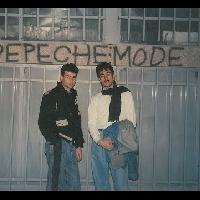
In Russia, May 9 is Victory Day, a national holiday. It’s also the birthday of Dave Gahan, lead singer with Depeche Mode, and a group of Muscovite fans have declared it Dave Day, gathering together to celebrate the group with homemade banners, mass sing-alongs and club nights. In Russia and countries of the former Soviet Union, the band’s music has been treasured since it was only available on illegal bootlegged cassettes in the 1980s, and it formed the soundtrack of the march toward freedom those countries embarked upon following the fall of the Berlin Wall. This situation is mirrored in Tehran, where fans take huge risks in listening to their music in a country that has banned all Western music since the Islamic Revolution. In the UK, the church of St Edward King and Martyr in Cambridge holds services for goths where they play Depeche Mode records. Turner Prize-winning artist Jeremy Deller and filmmaker Nicholas Abrahams tell these and other stories of faith and devotion from around the world in this fascinating and inspired documentary about fandom, which is at turns bizarre, funny, sad and often touching.

Mixbox is a new blending method for natural color mixing. It produces saturated gradients with hue shifts and natural secondary colors during blending. Yellow and blue make green. The interface is simple - RGB in, RGB out. Internally, Mixbox treats colors as real-life pigments using the Kubelka & Munk theory to predict realistic color behavior. That way, colors act like actual paints and bring more vibrance and intuition into digital painting.




Dame-Griff argues that digital communications sparked significant momentum within what would become the transgender movement, but also further cemented existing power structures. Covering both a historical period that is largely neglected within the history of computing, and the poorly understood role of technology in queer and trans social movements, The Two Revolutions offers a new understanding of both revolutions—the internet’s early development and the structures of communication that would take us to today’s tipping point of trans visibility politics. Through a history of how trans people online exploited different digital infrastructures in the early days of the internet to build a community, The Two Revolutions tells a crucial part of trans history itself.
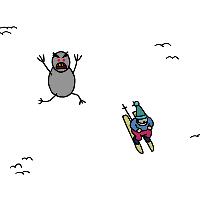
skifree but you're the yeti

(also check the documentation for supported desktop clients, as a good list of recommended rss desktop clients ;))

This is the blueprint for a revolution in the creation and distribution of media. We will discuss how and why to produce your own television using free tools, and explore how to use Community Television as an instrument for social change.
This text is divided in to three sections: A manual, a meta-manual, and a look back. These can be consumed in any order.
This text takes a decidedly American approach to history and theory, and while I assume these ideas are applicable elsewhere, I do not have the expertise or knowledge to comment on any place other than the US.
Feather Wiki is a lightning fast infinitely extensible tool for creating personal non-linear notebooks, databases, and wikis that is entirely self-contained, runs in your browser, and is only 55 kilobytes. The app and all of the content you create using it are stored within the single HTML file generated when you save your wiki. Publishing your content for the world to see is as simple as uploading that file to a web server, and updating is as simple as overwriting the file.
It was created to be like TiddlyWiki but with the smallest file size possible and a style more reminiscent of certain other popular wikis. Feather Wiki provides low-level access to its underlying code framework, so if there's something it can't do out of the box, then you can make it do that thing yourself.


AI-Detectors Biased Against Non-Native English Writers