hey disinvented the VCR. You might think that the reason we don't have VCRs anymore is because VCRs were supplanted by DVDs, PVRs and streaming, but that's not the case. They had it in for the VCR from the very start, and they never stopped trying to kill it. Eventually, they succeeded.

Beyond that, McClure believed Mark Ethan Smith was an interesting problem to observe within The Well's grand experiment. Smith was masterful at reading the system and manipulating it. McClure called her a vibes magician. "We were building a little culture here, and somebody came in and saw how it worked and just played it like an instrument," he recalls. "Just because she was obnoxious and had strange ideas didn't mean that she shouldn't get to play."
There was another consideration as well: Smith was a huge provider of food for thought and was completely, if predictably, outrageous. The more lively the discussion, the more people stayed logged on. Her outbursts were, in short, good for business.
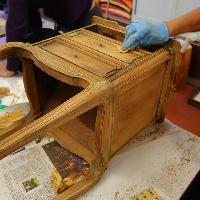
Vous avez sûrement, quelque part dans votre maison, de vieux meubles ou des objets dont vous n'avez pas envie de vous défaire. Une table de chevet oubliée dans un coin, un meuble d'appoint démodé ou une petite pièce qui mériterait une seconde vie ?
Chez les Débrouillardes, nous vous proposons deux manière de faire revivre vos meubles.
La première est un stage de restauration de meubles. La restauration de meubles anciens consiste à réparer, nettoyer et revitaliser des pièces qui ont traversé le temps. C'est une démarche respectueuse qui vise à conserver l'authenticité. Au cours de ce stage, vous apprendrez à maîtriser les techniques de restauration traditionnelles tout en développant votre propre sensibilité artistique.
La deuxième, est une formation pratique de rénovation de mobilier. L'occasion idéale pour apprendre à transformer un meuble existant. Au fil de cette journée, vous découvrirez les différentes étapes nécessaires pour rénover et relooker un meuble. Vous apprendrez à préparer correctement les surfaces, réaliser de petites réparations, appliquer une peinture adaptée et utiliser le papier peint pour apporter une touche décorative originale.
Que vous soyez débutant, ou déjà un débrouillard passionné, vous découvrirez des techniques simples et efficaces pour redonner une seconde jeunesse à vos trésors.
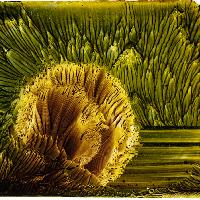
In 1885, while seeking means to indicate readily the intensities of vocal sounds, I first met with these [voice] figures, and, owing to their variety both in form and production, they have since absorbed much of my attention. The apparatus I have employed I call the eidophone. This is very simple. It consists merely of an elastic membrane, such as thoroughly flexible soft sheet-rubber, tightly stretched over the mouth of a receiver of any form, into which receiver the voice is introduced by a wide-mouthed tube of convenient shape. In some cases the receiver may be dispensed with, and the membrane be stretched across the open end of the tube itself.
…
My first experiments were made with sand, lycopodium powder, or the two substances mixed. I then tried for the production of voice-figures, flooding the disk of the eidophone with a thin layer of liquid ; e.g. water or milk. Upon singing notes of suitable pitch through the tube, not too forcibly, beautiful crispations appear upon the surface of the liquid, which vary with every change of tone. A note sung too forcibly causes the liquid to rise in, a shower of spray, the movements of which are too rapid to be readily followed by the eye. To facilitate observation denser liquids may be used. By using such liquids as colored glycerin particularly beautiful effects may be obtained. Subsequently I found that by employing moistened powder of different consistencies yet another description of figures appears. The earliest result of my experiments in this material shows centers of motion from which radiations diverge.

Jadernyj Titbit tells the story about the adventures of one Moscow guy who has gone to St.-Petersburg looking for the weekend to remember. Suddenly he gets involved in plot connected with new extra powerful drug called Nuclear Titbit. Humor in game is out of any censorship.
node-based live generative visuals
Face à la dépendance des Européens aux technologies américaines, il faudrait développer une « souveraineté numérique », c’est-à-dire une industrie du numérique locale (semi-conducteurs, logiciels, hébergement de données). Or, cette proposition de « souveraineté numérique » qui fait consensus nous semble à la fois irréaliste – du fait de la nature mondialisée de l’industrie du numérique – et politiquement inconséquente – car elle ne remet pas en cause le modèle de développement technologique qui est précisément la cause de notre dépendance. Mieux : elle encourage la fuite en avant technologique et ses multiples nuisances. Nous refusons donc ce mot d’ordre illusoire.
fuck off ai music
welcome to the fuck off ai music movement
in this movement we believe that ai music should fuck off.
you are welcome to join if you’d like

Poncho Wonky is a new release of Patchwork. While v3.18.1 was supposed to be the last release but I have a computer and I can't be stopped.
So, I decided to resume working on Patchwork on my own. I am worse developer than all the other clever hands that touched this code, but I can still get things working, hence here we are.

A Vulkan-based translation layer for Direct3D 7, 6, 5 and 3 which allows running 3D applications on Linux using Wine. It uses DXVK's D3D9 backend as well as Wine's DDraw implementation (or the windows native DDraw) and acts as a proxy between the two, providing a minimal D3D7/6/5/3-on-D3D9 implementation.
Note that D3D retained-mode applications are not supported, since the project only aims to implement immediate-mode.
These features are also available in DXVK-Sarek, in case you are using older graphics hardware.
"this site best viewed with a computer and a monitor"
Granulated caramel that can be used in any recipe as a one-to-one substitution for plain sugar.
I wasn’t entirely sure what to expect from Google’s latest climate report, but holy hell, I did not expect this.
The company’s total electricity consumption jumped from 31 terawatt hours (TWh) in 2024 to 43 TWh in 2025. This is very easily the biggest increase in their electricity consumption ever, and it puts them way ahead of Microsoft. It is almost certainly a reflection of the obscene energy hunger of their ever-expanding bloated generative AI systems, and a vindication of the warnings we’ve been raising for several years now.
Hey all, this is Simon, one of the devs from Mirlo. Just want to add this list of alternatives for anyone looking.
Ampwall (really good, kind, and technically savvy folks working on this, highly recommend checking it out)
Bandwagon (focused on decentralization and federation)
Fairplayer (a discovery tool for decentralized music providers, play music from musicians all over the internet, no central db, really good folks)
jam.coop (worker co-op, based in the UK, really good folks)
Subvert (a well heeled multi stakeholder co-operative with a strong marketing department, closed source, centralized).
Mirlo (our project, worker co-op. open source and aiming to be decentralized, of course, I'm biased, but I think we're doing a pretty good job).
LMK if I missed any. Tried to focus on digital purchasing and not streaming.
Edit: feel free to DM me w/ questions or like, hop in our discord.
A phenomenon I've noticed recently is people trying to occupy some untenable middleground wrt to the use of systems sold as "AI" -- this is a position where people try to recognize the harms of this tech but also hold space for "responsible" or "ethical" use.
(...)
Part of what makes that middle ground untenable and uncomfortable, I think, is that it requires carrying water for these clearly bad actors. You can set that bucket down and step out onto firmer ground.
This does require going against the mainstream, but that gets easier when a) you find you're not alone and b) you see how much of mainstream opinion on this is actually the result of marketing.
/fin for now
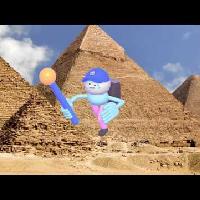

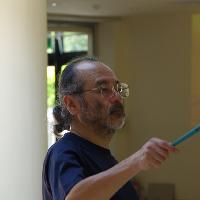

Synchresis is a term Chion invented to describe audiovisual relations based on simultaneity; when there is simultaneity between sounds and images, they blend with each other, and it becomes difficult, if not impossible, to separate them.
Chion describes synchresis as a universal, physiological phenomenon resulting from the makeup of our nervous system and not from any cultural conditioning, and as such operates as spontaneously as any reflex. It consists of perceiving the concomitance of given auditory and visual events as a single integrated event, so long as they occur simultaneously. Because this phenomenon occurs without any conscious effort on the part of the viewer, it leads viewers to establish a relationship of close interdependence and ascribe to a single common source sounds and images that may essentially be very different, originate from different sources and realistically have little in common.
pre-ASCII art / pictorial typography / text art archive site

chicken chicken chicken
Most voters don’t know that crypto and AI companies have spent more than $400 million this cycle to buy Congress. Let’s make that spending visible.
Making slides is one of the quickest and easiest parts of making a talk. I do it right at the end of the process. It’s much more important to get the story and the pacing and the order right. Then the slides fall into place.
I like to use zero text. The ideal scenario is no text at all on screen. The text comes from me speaking. Okay that isn’t really true. I like to put big bold mantras behind me like “LET CODE DIE” and “NO MORE IDEAS” and whatnot. But its not really writing: They’re symbols / images.
Never use bullet points
Fullscreen images / mantras only
(exceptions are allowed for storytelling purposes)
For Brussels artists, art workers and bottom-up initiatives run by artists, architects, independent curators or other cultural practitioners. The BARN Core Team facilitates connections in this ecosystem, focusing on sharing information and knowledge, community b