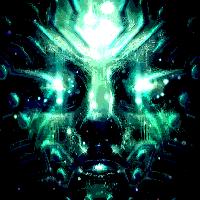
In Mannheim, an automated system reports hugs to the police
by Josephine Lulamae
Mannheim, a large city on the Rhine, deployed a video system that claims to automatically detect physical violence in some streets. It can confuse hugging with strangling, and it is unclear whether it can actually prevent violence.


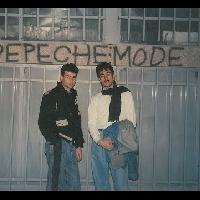
In Russia, May 9 is Victory Day, a national holiday. It’s also the birthday of Dave Gahan, lead singer with Depeche Mode, and a group of Muscovite fans have declared it Dave Day, gathering together to celebrate the group with homemade banners, mass sing-alongs and club nights. In Russia and countries of the former Soviet Union, the band’s music has been treasured since it was only available on illegal bootlegged cassettes in the 1980s, and it formed the soundtrack of the march toward freedom those countries embarked upon following the fall of the Berlin Wall. This situation is mirrored in Tehran, where fans take huge risks in listening to their music in a country that has banned all Western music since the Islamic Revolution. In the UK, the church of St Edward King and Martyr in Cambridge holds services for goths where they play Depeche Mode records. Turner Prize-winning artist Jeremy Deller and filmmaker Nicholas Abrahams tell these and other stories of faith and devotion from around the world in this fascinating and inspired documentary about fandom, which is at turns bizarre, funny, sad and often touching.

Mixbox is a new blending method for natural color mixing. It produces saturated gradients with hue shifts and natural secondary colors during blending. Yellow and blue make green. The interface is simple - RGB in, RGB out. Internally, Mixbox treats colors as real-life pigments using the Kubelka & Munk theory to predict realistic color behavior. That way, colors act like actual paints and bring more vibrance and intuition into digital painting.


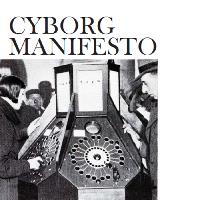

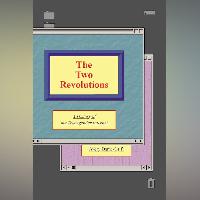
Dame-Griff argues that digital communications sparked significant momentum within what would become the transgender movement, but also further cemented existing power structures. Covering both a historical period that is largely neglected within the history of computing, and the poorly understood role of technology in queer and trans social movements, The Two Revolutions offers a new understanding of both revolutions—the internet’s early development and the structures of communication that would take us to today’s tipping point of trans visibility politics. Through a history of how trans people online exploited different digital infrastructures in the early days of the internet to build a community, The Two Revolutions tells a crucial part of trans history itself.
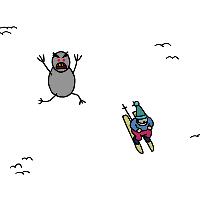
skifree but you're the yeti

(also check the documentation for supported desktop clients, as a good list of recommended rss desktop clients ;))

This is the blueprint for a revolution in the creation and distribution of media. We will discuss how and why to produce your own television using free tools, and explore how to use Community Television as an instrument for social change.
This text is divided in to three sections: A manual, a meta-manual, and a look back. These can be consumed in any order.
This text takes a decidedly American approach to history and theory, and while I assume these ideas are applicable elsewhere, I do not have the expertise or knowledge to comment on any place other than the US.
Feather Wiki is a lightning fast infinitely extensible tool for creating personal non-linear notebooks, databases, and wikis that is entirely self-contained, runs in your browser, and is only 55 kilobytes. The app and all of the content you create using it are stored within the single HTML file generated when you save your wiki. Publishing your content for the world to see is as simple as uploading that file to a web server, and updating is as simple as overwriting the file.
It was created to be like TiddlyWiki but with the smallest file size possible and a style more reminiscent of certain other popular wikis. Feather Wiki provides low-level access to its underlying code framework, so if there's something it can't do out of the box, then you can make it do that thing yourself.



AI-Detectors Biased Against Non-Native English Writers

openconstructor is an HTML5-based physics simulation for building and animating springy creations. It is an open-source reimplementation of the sodaplay browser game released by soda creative ltd in 2000.

women of ambient

“One thing you learned from that is if you have a company with a huge press department, you can rebrand history in your interest,”
Each year we give away thousands of dollars worth of sounds for free in celebration of the Game Developers Conference. This is our archive. All of the sound effects are royalty free and commercially usable with no attribution required. You can use the sound effects on an unlimited number of projects.
All of the files we send out are just a small sample of our suppliers complete collection. We usually pick a couple of sounds from each sound effect library added to Sonniss over the year. None of the files we are giving away have been modified in any way, they are exactly the same files we sell. If you would like more options and design choices to work with, please consider purchasing the corresponding sound library.