228 private links

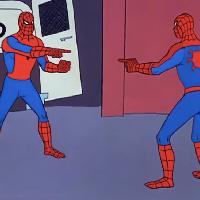

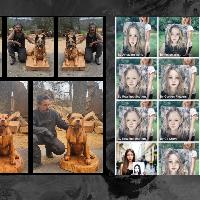
The once-prophesized future where cheap, AI-generated trash content floods out the hard work of real humans is already here, and is already taking over Facebook.
We evaluate our technique on the task of unlearning the Harry Potter books from the Llama2-7b model (a generative language model recently open-sourced by Meta).
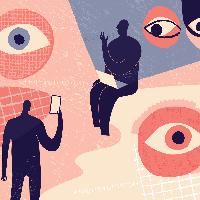
AI-Detectors Biased Against Non-Native English Writers
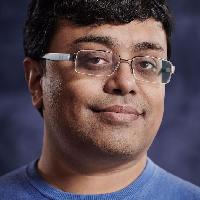
“One thing you learned from that is if you have a company with a huge press department, you can rebrand history in your interest,”


This is a reflection on the ethics of AI/ML in critical art practice from the perspectives of artists, researchers, and scientists. Rather than discuss an 'ethics of AI' in relation to the intentions of the engineers and organisations who produce these technologies, we want to articulate here what we believe is the individual responsibility of the critical practitioner in the use of these tools. What follows is a series of considerations that we have come to in our practices with these tools, and represent our (current) thinking on the use of ML/AI tools in critical art practice. of ML/AI tools in critical art practice.
This is not a rulebook for the 'right' way to use these tools, but a series of questions and provocations that contribute to the ongoing discussions surrounding them - discussions happening within our fields of practice and research, and in the wider cultural spaces we live in.
It is intended to be a shared resource for discussion, and to be expanded upon with the experience of other artists, designers, and researchers.
lawyer uses chatgpt
This web app sorts/searches through images in a directory on your computer using OpenAI's CLIP model, and the new File System Access API. Here's the Github repo for this web app, and here's the Github repo for the web-ported CLIP models.
It's an essay that valorises the creativity of users, that talks about people's joy at using tools for things they're not intended for, that talks about how messing around on the computer is a joyous thing. And... it's this kind of folk or real understanding of how the system works that lets people do unexpected things with the system. The kind of... it's fun to play with the computer. But so often the way AI is pitched is... "this will let you be creative without having to mess around dealing with the actual substance of the work". And... you can't be creative without getting your hands messy. That's where the ideas come from!
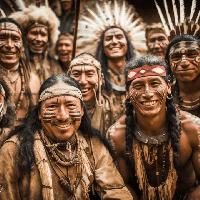
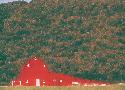
« Ontolography, then, suggests a system of calling forth images without any direct observation or documentation at all. It’s all built on past documentation, like a photographer who only takes photographs of magazines. It’s an acknowledgement that we don’t need to do the things we want to document. We’ve done every pose enough that a machine could produce it, and now we don’t need to pose but only to reference past poses from our imagination and call them up.
The images that rise up from this movement are “pictures of pictures,” to steal DeLillo’s phrase. We don’t need events, we just need event categories. We can create documentation of a birthday party without eating a single piece of cake.
Ontolographs are images made from information categories instead of events. »
🎵 Introducing Diffusion Radio - A 24/7 livestream of AI-generated music! 🎵
The Harmonai team has been working hard on diffusion models for music generation. We're happy to bring you this stream to share the progress of our experiments!
We definitely appreciate any feedback you have on the music. These models aren't fully trained and are being worked on as we speak. We will keep sharing fresh new output. Keep tuning in if you want to hear our progress over the weeks and months.
Disclaimer: The music is shared for research / educational / fair use purposes only. Any overfitting or similarity to real music is accidental (we're trying to avoid it).
Harmonai - [[ AI music R&D lab ]]
➡ Follow https://twitter.com/harmonai_org
➡ Join https://discord.gg/harmonaiplay