Daily Shaarli
10 September 2025
The rise of climate denialism in the general population (
5% between 2019 and 2023) has been accompanied by a very significant increase in denialist activism on “X”/Twitter since the summer of 2022, and increased hostility towards climate scientists.
Through global tracking of Twitter exchanges about climate change between 2019 and 2023, as well as exchanges about COVID-19 pandemics, we analyzed this online trend and its interaction with other societal issues like politics and COVID-19 pandemics.
Beyond fact-checking, we show, through complex networks and semantic analyses, that there are structural differences between these denialist and pro-climate online communities, as well as between the circulation of false information and other climate change-related narratives.
All the evidence suggests that the behavior of deniers is designed to deceive, and that they are over-represented on social networks compared to what they actually represent offline. This is particularly true on “X”/Twitter since Musk’s takeover.
We have also highlighted the globalized aspect of this new denialism, its alignment with the interests and visions of powers such as Russia and how it has benefited from the COVID-19 pandemic.
Now that all the pieces are in place, here is the economic nexus of semi/genAI that particularly interests me:
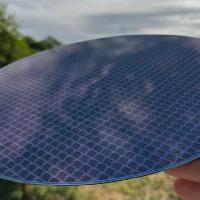
If model providers make inference much more efficient, then they will not use enough computing power to consume all that is brought to market by the semiconductor industry. If this happens, it will trigger a downward cycle in this industry, significantly slowing down the production of new hardware and possibly having significant global economic and financial repercussions.
If model providers do not make their inference processes more efficient, they will not be able to structurally reduce their marginal costs and, failing to achieve the desired profitability, will resort to the usual means (advertising, tiered subscriptions), which will slow down adoption.
If adoption slows down, model providers will struggle to achieve profitability (with the exception of those with captive markets), their demand for computing power will weaken, and the semiconductor industry will produce excess capacity and enter a downward cycle, taking part of the AI industry with it.
So, the central issue linking today’s semiconductor industry and genAI model providers is how to define how much efficiency gains are enough. Jokingly, we could call this ‘inference inefficiency optimum’.