228 private links


The original Luddites—a movement of early nineteenth-century English weavers, who infamously smashed the new machines that transformed a skilled and well remunerated livelihood into low-grade piecework performed by children—did not oppose technology in its entirety. Indeed, as skilled craftspeople, they were adept users of it. Rather, they fought against what they referred to as “Machinery hurtful to Commonality,” which sought to break up the autonomy and social power that underpinned entire vibrant communities, so that a new class of factory owners might benefit.
It's been interesting how the prefix cyber has drifted in meaning over the years. Let's explore together.
I wrote two thirds of this article and then I discovered Annalee Newitz was way ahead of me and wrote about the same thing two years ago. Since my article has different details I decided to finish it and put it on my blog after all. There's plenty of room in cyberspace. But read Annalee Newitz's article too!
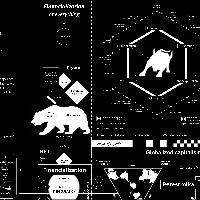
Calculating Empires
A Genealogy of Technology and Power Since 1500
Kate Crawford and Vladan Joler
(2023)
Marshall McLuhan once said, “There is absolutely no inevitability as long as there is a willingness to contemplate what is happening.” The handwaving rhetoric that I’ve called a Borg Complex is resolutely opposed to just such contemplation when it comes to technology and its consequences. We need more thinking, not less, and Borg Complex rhetoric is typically deployed to stop rather than advance discussion. What’s more, Borg Comlex rhetoric also amounts to a refusal of responsibility. We cannot, after all, be held responsible for what is inevitable. Naming and identifying Borg Complex rhetoric matters only insofar as it promotes careful thinking and responsible action.
n light of the latest dire climate report, i've decided to add a module to my class this quarter on the internet & the climate crisis
any good readings out there on internet infrastructures & the climate? i'm woefully under-read, but hoping to change that!

an interview with Fred Turner of "From Counterculture to Cyberculture: Stewart Brand, the Whole Earth Network, and the Rise of Digital Utopianism"
But then in June of 2007, the iPhone came out. Thirteen months later, Apple’s App Store debuted. Suddenly, the most expedient and enjoyable way to do something was often tapping an individual icon on a screen. As smartphones took off, the amount of time that people spent on the truly open web began to dwindle.
Tech companies are run by a feckless leadership accountable to no one, creating a toolkit for authoritarianism while hypnotized by science-fiction fantasy.

HISTORICAL

Published in 1982 and so spot on

We are the first technology.
Retrofitting refers to the addition of new technology or features to older systems
Doug Engelbart giving the "mother of all Demos" 1968
a history of cybernetic animals and early robots
"explores the presence of the supernatural, the manifestations of spirits, and (trans)communication with the beyond facilitated by technical media."