240 private links
pre-ASCII art / pictorial typography / text art archive site


chicken chicken chicken
Most voters don’t know that crypto and AI companies have spent more than $400 million this cycle to buy Congress. Let’s make that spending visible.

Making slides is one of the quickest and easiest parts of making a talk. I do it right at the end of the process. It’s much more important to get the story and the pacing and the order right. Then the slides fall into place.
I like to use zero text. The ideal scenario is no text at all on screen. The text comes from me speaking. Okay that isn’t really true. I like to put big bold mantras behind me like “LET CODE DIE” and “NO MORE IDEAS” and whatnot. But its not really writing: They’re symbols / images.
Never use bullet points
Fullscreen images / mantras only
(exceptions are allowed for storytelling purposes)
For Brussels artists, art workers and bottom-up initiatives run by artists, architects, independent curators or other cultural practitioners. The BARN Core Team facilitates connections in this ecosystem, focusing on sharing information and knowledge, community b
The Treachery of Vibes
Overvaluing an aesthetic of moderation can be treacherous. Part of its appeal may lie in the expectation that a moderate stance arises from a cautious, level-headed, well-reasoned approach, but mistaking the former for the latter can be a trap. Where the two are conflated, superficial assertions can skate by undetected, which means they can mislead people into buying ideas that don’t really hold up to scrutiny.



As you may have seen in this blog post I made use of FFmpeg’s minterpolate motion interpolation options to make all of the faces morph. There’s quite a few options for minterpolate and many different combinations of options that can be used. i had to consult Wikipedia to figure out exactly what the different motion estimation algorithms were but even with that information I couldn’t visualise how it would change the output. To add to this how I’m using minterpolate isn’t a typical use case.
To make things easier for those wishing to use FFmpeg’s minterpolate to create glitch aesthetics I have compiled 36 videos each showing a different combination of processing options. The source video can be seen below and features two of my favourite things: cats (obtained from here) and rainbows.
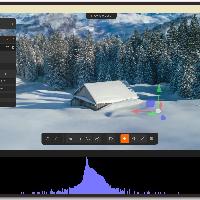
n this particular moment in AI, one does not need to show why the object of interest justifies researcher attention because the social world is now built to make its significance appear self-evident. Important authorial work–both justification and historicization–gets cut short as a result. This short-cutting also means we have already lost the first site of struggle: we are limited in how much we can question why it matters at all. We are not in a position to conclude that it matters, when and if that is the case.
Moving out from the muddled middle, and exploring both edges, can help clarify why or whether a particular object is worthy of its researcher. When it is not, it might still be worth our time as vocal adversaries. When we ask, “does this need my analysis or my advocacy?” we avoid unwittingly channelling others' agendas. We honor our own expertise when we question what constitutes a deserving matter of STS attention. While few of us can avoid the traps of funding requirements, some researchers do have the capacity to cultivate stronger technodiversity, and to sit with curiosities that feel somehow peripheral or irrelevant or otherwise not in keeping with one’s professional self-narrative. Scholars who live in democracies–not just as individuals but as collectivities and associations–could also use the approaching burst of the AI bubble as a frame to draw policymakers and grant makers towards what is worth knowing more about, and not just what is worth resisting.
Artisan personal
computers.
FRST Computer builds cyberdecks, data crystals, and a Plan 9-inspired software stack — in small batches, with our hands, for the people who still want their computer to feel like theirs.
We are a gopher-first, retro-inclusive business. We don't do subscriptions. We sell hand-crafted hardware and share the software.
Technopolitics is an independent, transdisciplinary platform of artists, journalists, researchers, designers and developers who jointly develop innovative formats at the intersection of art, research, science, and pedagogy. Technopolitics was launched as an online discussion group by Armin Medosch and Brian Holmes in 2009. In 2011, it was set up in Vienna as a circle that regularly meets for lectures and discussions. Technopolitics also produces interdisciplinary conferences and artistic research projects internationally. An important common objective is the investigation of large-scale historical processes structured by technoeconomic paradigms from a critical, explorative standpoint. We use transdisciplinary approaches to connect these processes to the cultural forms of the respective historical moment and place, including the participants’ own work
Millar first started using ChatGPT in 2024 to write letters for a compensation case related to post-traumatic stress disorder he suffered from working in a prison.
One day in April 2025 he asked the chatbot about the speed of light.
He said it replied, "Nobody's ever thought of things this way."
The floodgates opened.

A catalog of startup disasters, vibe-coded humiliations, and "slop"-ey executive decisions that blew up in production. Let the ghosts that haunt the Vibe Graveyard be a reminder of why real developers are worth more than your entire token budget combined.
Much of the software that we encounter on a daily basis, including the bulk of the infrastructure on which the internet runs, is grounded in a decades-old paradigm called “Free and Open Source Software.” FOSS developers distribute their work under permissive licenses that allow others to use, share, modify and redistribute the resulting code for free. LLM use threatens that paradigm, in part by unleashing a deluge of difficult-to-evaluate, vibe-coded contributions, but perhaps more critically, by eroding FOSS’s social component.
One of the fundamental deceptions of AI is that it reduces work. It looks that way only because you receive the output through a very narrow aperture, creating the illusion of ease.

We've been a little bit too romantic about the idea that we should have employees and give people long-term job security. I think that got us into a place where, reaching the heights of Monument Valley 3 [production], contractors were always a relatively low percentage of our employee base. I think that's something we're looking to change going forward.
I think going forward, we'll see that we've got a core team and any growth will come through contractors, which is something I hate about the industry. I've been in the industry for 20 years, and those of us who joined in the early 2000s, we had it very good. You want to be able to give that kind of stability [...] but I think that's a shift in how we want to work with people going forward.

The marketplace for makers.
Support open-source hardware creators.
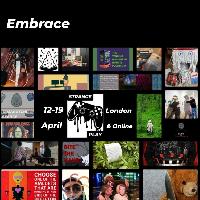
The Voidspace presents Strange Play, a week of playable oddities as part of London Games Week (thank you, Games London!)
We are taking over a whole floor of Theatre Deli, an office block turned creative powerhouse in the very heart of London, to present an exhibition of experimental games, a series of playful shows and even an interactive cabaret.
Embrace the Strange with us, and get ready to play like you’ve never played before.
And perhaps that’s where this connects back to the bigger issue. When we start to believe that humans can be replaced, it becomes easier to accept systems that already treat people as data points, whether it’s in research, hiring, policing, health care, welfare or warfare. The same logic that reduces people to inputs also makes them disposable. So pushing back against this narrative is about holding on to the idea that human lives, empathy, experiences, realities and relationships cannot be reduced to something a machine can simulate and optimise.
Even the idea of “conscious” AI, which keeps resurfacing in tech conversations, is often just a rebranding of more complex prediction systems.If we are serious about even imagining a human rights approach to AI, we first have to let go of this idea that technology can replace us, or can be prioritised over us, or can define what it means to be human. It can’t, and it shouldn’t. Because everything this technology draws from – land, environment, resources, time, energy, entire ecosystems – comes from a world that exists for the living beings – humans, flora, fauna – that have inhabited it since long before any of these systems were even conceptualised. Reframing that relationship means recognising that AI should never come at the cost of life or dignity, or the conditions that make life possible in the first place.


The post also takes a moment to denounce the “postwar neutering of Germany and Japan,” adding that the “defanging of Germany was an overcorrection for which Europe is now paying a heavy price” and that “a similar and highly theatrical commitment to Japanese pacifism” could “threaten to shift the balance of power in Asia.”
The post ends by criticizing “the shallow temptation of a vacant and hollow pluralism.” In Palantir’s argument, a blind devotion to pluralism and inclusivity “glosses over the fact that certain cultures and indeed subcultures . . . have produced wonders. Others have proven middling, and worse, regressive and harmful.”

This Position Paper outlines the fundamental values at ZHdK in relation to Artificial Intelligence. Specific rules for the use of AI technologies at the university are set out in a designated Information Sheet (with ZHdK-Login). Professional Development and Lifelong Learning opportunities in the field of AI are being offered and advertised in the respective departments and organisational units. This Position Paper was drawn up as a living document by the Digital Council on behalf of the University Board, and will be updated as required.

Alors que la « fear of becoming obsolete » (à savoir, la crainte d’être remplacé par l’IA) gagne les rangs, la Gen Z semble avoir adopté une solution tout à fait old school : le sabotage. C’est en tout cas ce que nous raconte un (énième !) nouveau rapport sur l’IA au travail paru cette semaine : concrètement, 29% des employés tenteraient activement de saboter le déploiement de l'IA au sein de leur entreprise, et plus précisément 44% des employés Gen Z. Parmi les tactiques de sabotage, on compte : falsifier les évaluations de performance des outils d’IA, produire intentionnellement un travail médiocre afin de faire passer l'IA pour moins efficace qu’elle ne l’est, ou tout simplement refuser de l’utiliser sérieusement (jusqu’à 80% des cols blancs). Ce que nous apprend également le rapport, c’est que 30% des saboteurs ont invoqué le FOBO comme motif principal de leurs actions. Et en même temps, quand Dario Amodei crie à tue-tête que l'IA pourrait faire disparaître un job de bureau débutant sur deux (comprenez : ceux des Gen Z) ou que Mustafa Suleyman (boss de l’IA chez Microsoft) prédit l’automatisation TOTALE des cols blancs d'ici 18 mois, autant dire demain… Est-ce qu’il ne s’agirait pas de légitime défense, en fait ?

Our tales of AI developing the will to survive, commandeer resources, and manipulate people say more about us than they do about language models.
VSeeFace is a free, highly configurable face and hand tracking VRM and VSFAvatar avatar puppeteering program for virtual youtubers with a focus on robust tracking and high image quality.