

"Abrams isn't a man so much as he's an avatar of cultural entropy. If you make something popular enough eventually you will die or sell it off and a person in thick rimmed glasses whose main artistic vision is that he loves to have meetings will take it and sandblast it until it's nothing. I hate to see this happen here but maybe it's good that this happened. Maybe every franchise should collapse into a version of itself that makes shareholders nod and shake each others' hands. We should learn to speak in a language that rich people who don't dream can't comprehend."


A library for p5.js which adds support for interacting with Serial devices, using the Web Serial API (currently supported on Chrome and Edge). It provides the following features:
Easy to use API, largely the same as Processing's Serial library
No async/await or callbacks needed in sketches
Can automatically connect to previously-used serial ports (great for installations)
Unicode support (Serial.print("你好"") in Arduino)
Multi-byte matching in readUntil(needle)
Well tested, also works in the p5.js web editor

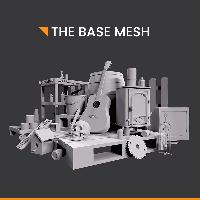
500+ Base Meshes. Updated weekly.
100% free. CC0 license.


This period has also been humbling because as unfathomably massive and all-consuming of a company as we are, we’ve also learned what it’s like to build on other platforms — the most important of which is the Human body. Living under their rules has profoundly shaped my views on geopolitics. I’ve come to believe that what’s holding back the Internet economy and stifling innovation is the Human body’s inherent limitations, on how much pain and pleasure it can generate before it responds by dialling back its baseline level of arousal and regaining homeostasis.
We’ve tried to take a different approach. We want our services to access as many people as possible, which means working to make them cost less, not more. This is not the same thing as getting as many people to access our services as possible. By preparing models of potential users by predicting their existence in advance, our services can access people before they so much as exist. Ready when you are!
Our mobile apps are free so that you don’t have to be. Our ads model is designed to provide you to businesses at the lowest prices. Our commerce tools are available at cost or with modest fees. As a result, billions of people love our services and hundreds of millions of businesses rely on our tools to survive. There’s always room for more, because we always make room for our friends.


▢ 3 bananas very ripe to black
▢ 5 tablespoons butter melted and cooled
▢ 1 tablespoon canola oil or vegetable oil
▢ ¼ cup buttermilk at room temperature
▢ 2 eggs beaten
▢ 1 teaspoon vanilla
▢ 2 cups flour
▢ ½ cup granulated sugar
▢ ¼ cup brown sugar
▢ ¾ teaspoon baking soda
▢ ½ teaspoon salt
▢ ½ cup chopped walnuts optional