241 private links

In "A Large Inscription", a microphone stand is dragged over a field of gravel; an indispensable instrument of the modern demagogue is knocked over like an overrun statue. Rotating slowly, it leaves behind an evolving elegant trace with no beginning or end.
In contrast to this continuous gesture, "A Great Noise" punctuates the passage of time with a Sisyphean physicality: a microphone encased in a cement block is lifted and dropped, slamming against a larger base. Like mechanically-operated durational performance art, the visceral force evokes tension of the microphone’s inevitable fate, whether that means succumbing to a violent end or breaking free of its shackles.

les LLM (plus généralement les IAG) sont des produits stimulants addictogènes au service du fascisme. Stimulants, car ils provoquent une sensation de surproductivité, d'hyper-performance. D'autant plus addictogènes que leur facilité d'accès, leur simplicité d'usage et leur faible coût personnel facilitent leur recours à tout un chacun. Au service du fascisme car c'est lui qui cherche à trier, standardiser et exploiter les humains au mépris de la diversité de la vie.

I go looking at these kinds of objects when I am feeling unmoored because they help center me in a continuum of time, without making me feel voiceless or aggregate or disposable. Especially now, dealing with the conditions under which we see so much of our work gathered and trained on as data, which is then used to argue for the inessential nature of our field, or that our work could continue unpeopled.
But the hedgehog gestures at, instead… specific hands that made it, specific streets in which it was played with. The toy-making still recognizable as a practice all these millennia later. Legible through a changed world. Important because of its specificity.

Dans le champ de l’art ou du design, on veut « explorer les possibles de l’IA », considérant que la charge critique des productions sera suffisante pour équilibrer le discours. LOL. On se rue sur les mots-clés du moment en espérant recueillir quelques financements (les écoles d’art, on vous voit). On critique vertement, vertueusement, en même temps qu’on produit des discours fatalistes, on se désole, on râle un peu et on se résigne doucement. Le refus pur et simple est réputé impossible, inadéquat, inutile, naïf.
Faisant mine de ne pas voir ou de ne pas comprendre, perdu·es en plein FOMO**, on valide l’agenda, on souscrit au programme. On est d’accord.
Si l’on s’attaquait aux structures du technopouvoir avec ne serait-ce qu’une infime parcelle de la violence avec laquelle il s’attaque aux conditions de la vie, nous nous verrions incarcérés ou exécutés – selon le bord du monde où l’on se tient. Alors, nos critiques équilibrées, nos bien-pensances social-démocrates, nos contorsions vaguement accusatoires depuis le frais des centres d’art, leur en touche une. Non, même pas.
On ne joue pas avec des alumettes et un bidon d’essence fournis par des psychopates dans une forêt dessechée.
Si l’on considère l’urgence et le drame des enjeux – la montée des eaux et celle du fascisme, l’effondrement du vivant et du progrès social – on se doit d’y faire face. La compromission confortable, la lâcheté commode, la résignation face à l’air nauséabond du temps qu’on nous vend, ne peuvent rester des options acceptables. Il n’y a pas d’alternative.

Making Instagram such a central part of my practice was taking its toll on my head. I knew I was basing much of my self-esteem on positive reactions and keeping myself relevant to a growing audience that weren’t even the audience I was trying to speak to. I was mainlining dopamine through my phone and it was turning me into a twat. I couldn’t post freely anymore, couldn’t share mistakes or messy momemts or failed experiments, for fear of backlash and shattering the illusion I was trying to build. Everything had to be glossy and perfect and ready-to-ship. That’s what I’m grappling with, above.
(...)
The second iteration of Blobshop launched in October 2022 with minimal fanfare and little response. Years of slow posting and a severely reduced level of engagement with Instagram meant I was greeted with a punishingly low-priority place in the new algorithm-driven feeds. I could not - would not - put in the level of effort required to claw my way back to the top. I cringed at the thought of making a reel or using a trending audio. It felt humiliating and my heart wasn’t in it. I didn’t need to make them to survive anymore, having succumbed to full-time work in web development, so there was no need to force myself to play the game. I wasn’t willing to manipulate algorithms for attention I no longer craved. I really only wanted to prove to myself that I could do it and make it feel like mine again, rather than an idea that had been co-opted or diffused into something else.
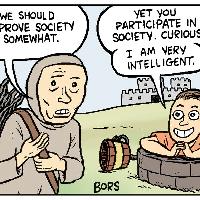
But know that this is effectively purity testing. “I’m not going to listen to your words until you’ve solved the problem you are talking about”. It is a way to refuse to engage with the story. It is lazy.
Now, I know places that have finally managed to rid themselves of proprietary platforms, but it did take them a few years. But I’m happy that in the meantime I already listened to what they had to say, and attended their events.

download web fonts (WOFF/TTF/WOFF2/OTF) present on the page.
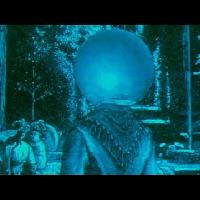
Our Lady of the Sphere (1968) - Larry Jordan

Adding battery charger to ESP8266 and ESP32 (well done)

BotAlgorithme is a project that aims at making plant computational models accessible to an audience as large as possible. We are convinced that plant models are unique tools for teaching complex plant processes. Currently, our preferred process is the regulation of the root water intake.
Half-Life: Anti-Climax is my take on the "battle you have no chance of winning" the G-Man offers you once you decline his job offer at the end of the Half-Life campaign. Is there truely no chance to win or can you lead Gordon to victory and freedom?

Cool Text is a FREE graphics generator for web pages and anywhere else you need an impressive logo without a lot of design work. Simply choose what kind of image you would like. Then fill out a form and you'll have your own custom image created on the fly.



Drawing on Illich's 'Tools for Conviviality', this talk will argue that an important role for the contemporary university is to resist AI. The university as a space for the pursuit of knowledge and the development of independent thought has long been undermined by neoliberal restructuring and the ambitions of the Ed Tech industry. So-called generative AI has added computational shock and awe to the assault on criticality, both inside and outside higher education, despite the gulf between the rhetoric and the actual capacities of its computational operations. Such is the synergy between AI's dissimulations and emerging political currents that AI will become embedded in all aspects of students' lives at university and afterwards, preempting and foreclosing diverse futures. It's vital to develop alternatives to AI's optimised nihilism and to sustain the joyful knowledge that nothing is inevitable and other worlds are still possible. The talk will ask what Illich has to teach us about an approach to technology that prioritises creativity and autonomy, how we can bolster academic inquiry through technical inquiry, workers' inquiry and struggle inquiry, and whether the future of higher education should enrol lecturers and students in a process of collective decomputing.

Pynchon's Sound of Music is dedicated to cataloging, exploring, and interpreting the manifold manifestations of music in Thomas Pynchon's work. An original mix of close and distant readings, this monograph em-ploys a variety of disciplines—from literary studies and musicology to philosophy, media theory, and his-tory—to explain Pynchon through music and music through Pynchon. Encyclopedic and eclectic—though never exhaustive—in its approach, Pynchon's Sound of Music discusses the author's use of instruments such as the kazoo, the harmonica, or the saxophone and embarks on close readings of the most salient and musicologically tantalizing passages. Zooming out to a bird's eye view, all his historical musical references and allusions are put into perspective to trace the trends and tendencies in the development of the oeuvre's interest in music. A treasure trove for fans and an invaluable source for future scholarship, this book includes the Pynchon Playlist, a 900+ item catalog of all musical references, and an exhaustive index of more than 700 appear-ances of musical instruments.

Unlike today's CG software, I did not use the method of modelling while looking at the three-view diagram on the screen with the mouse, but designed it once on graph paper, and then input values and other information as text in an editor. It was a daunting task when I think about it now, but it was quite interesting to see the letters and numerical values I had listed transformed into pictures. If the pluses and minuses or the digits of the numerical values were different, something ridiculous would be created. It made me laugh a lot.
Relax…it's only the climate crisis
Oilwell is a wellness app to help you embrace climate chaos, created by Edelman, Oil and Gas PR
In the context of computational text collage, I propose that “distance” emerges when the collagist acknowledges the material histories of their corpora and the collagist’s relationship with them—including the other human beings that brought these corpora into existence. Those others may be friends, mentors, ancestors, one’s earlier self, neighbors, or even perfect strangers. Regardless, the melancholy and the meaning of the collage arise only through the acknowledgment of the other’s absence.
Creators of large language models are very eager to conceal this distance. They do so by flattening the materiality of their corpora, thereby effectively severing the text from its own history and rendering uniform what had been equivocal—like bulldozing a graveyard. Yet the distance and the melancholy persist, despite this attempt at hiding it away. When I’m writing with a large language model, I am all too aware of the ghosts and strangers whose voices I’m speaking with. The keyboard beneath my fingers hums with frustrated mourning.
Eno is a data language for all people. Its simple structure welcomes a wide audience, both in regards to cultural background as well as technical ability. Deliberate design choices such as a flat hierarchy and the absence of types at the language level make it one of the easiest data languages to grasp and author content in.