241 private links


Portable file server with accelerated resumable uploads, dedup, WebDAV, FTP, TFTP, zeroconf, media indexer, thumbnails++ all in one file, no deps

GPT-5’s release and claims of its “PhD-level” abilities in areas such as coding and writing come as tech firms continue to compete to have the most advanced AI chatbot.
And it sees 3 letters b in Blueberry
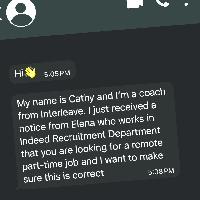
I responded to one of those spam texts from a “recruiter”—then took the job. It got weirder than I could have imagined.
In an email dated June 9, 2016, Facebook CEO Mark Zuckerberg directed engineers at his company to find a method of obtaining "reliable analytics" about Snapchat, which he noted that Facebook lacked due to Snapchat's network traffic being encrypted.[11] The solution Facebook engineers proposed to Zuckerberg's directive was to use Onavo, which allowed the company to read network traffic on a device prior to its being encrypted, thereby giving the company the ability "to measure detailed in-app activity" and to collect analytics on Snapchat app usage from devices on which Onavo was installed.[11] It did this by creating "fake digital certificates to impersonate trusted Snapchat, YouTube, and Amazon analytics servers to redirect and decrypt secure traffic from those apps for Facebook’s strategic analysis."
like Etcher, much lighter


My stance on the current trend of using The Lesser Key of Solomon at work and in one's personal life:
-
There's no evidence these evil spirits really are the 72 princes mentioned in The Lesser Key (and their innumerable minions). They only started telling us their "names" after someone incorporated the text of Ars Goetia in a (poorly-worded) binding ritual.
-
There's also no evidence that anyone's binding rituals actually work. It's always the same thing: Belial is asked to clean someone's house but burns it down instead and then everyone blames the binding ritual, summoning circle, wand, chalice, etc.
-
While most wizards report that making dark pacts with imps improves their spell-casting ability there are plenty of other familiars that are safer and more trustworthy.
-
There's a trend of reassuring people about this by asking spirits like Asmodeus the Prince of Lies if they are being truthful. This feels naive at best and actively malicious at worst.
-
It's not clear to me that risking your immortal soul to make your boss a bit richer is a good idea, to say nothing of risking your immortal soul to do a better job keeping up with email.
-
Just because everyone else has already torn innumerable holes in reality and brought forth legions of demons into our universe does not change my own feelings about it, though it certainly motivates a heightened level of interest in exorcisms and abjuration magic.

At some point the momentum behind NVIDIA slows. Maybe it won't even be sales slowing — maybe it'll just be the suggestion that one of its largest customers won't be buying as many GPUs. Perception matters just as much as actual numbers, and sometimes more, and a shift in sentiment could start a chain of events that knocks down the entire house of cards.
I don't know when, I don't know how, but I really, really don't know how I'm wrong.
I hate that so many people will see their retirements wrecked, and that so many people intentionally or accidentally helped steer the economy in this reckless, needless and wasteful direction, all because big tech didn’t have a new way to show quarterly growth. I hate that so many people have lost their jobs because companies are spending the equivalent of the entire GDP of some European countries on data centers and GPUs that won’t actually deliver any value.
But my purpose here is to explain to you, no matter your background or interests or creed or whatever way you found my work, why it happened. As you watch this collapse, I want you to tell your friends about why — the people responsible and the decisions they made — and make sure it’s clear that there are people responsible.
Sam Altman, Dario Amodei, Satya Nadella, Sundar Pichai, Tim Cook, Elon Musk, Mark Zuckerberg and Andy Jassy have overseen a needless, wasteful and destructive economic force that will harm our economy and the tech industry writ large, and when this is over, they must be held accountable.
And remember that you, as a regular person, can understand all of this. These people want you to believe this is black magic, that you are wrong to worry about the billions wasted or question the usefulness of these tools. You are smarter than they reckon and stronger than they know, and a better future is one where you recognize this, and realize that power and money doesn’t make a man righteous, right, or smart.

The Tiny Percentage of Trans People Who “Detransition” Largely Do So Because of Transphobia

Only a small percentage of users engage in truly toxic behaviour, but they’re responsible for a disproportionate share of hostile or misleading content on nearly every platform, from Facebook to Reddit. Most people aren’t posting, arguing, or fuelling the outrage machine. But because the super-users are so active and visible, they dominate our collective impression of the internet.


A portable, offline media server powered by the ESP32-S3 in a thumbdrive form factor.
Stream movies, music, books, and shows anywhere — no internet required.
A tool for burning visible pictures on a compact disc surface

nouvelle adresse

If you find yourself with your finger hovering over the final keystroke necessary to type an em dash, or pausing to decide if you should backspace the occurrence of the word “elevate” that you just typed, ask yourself a simple question: Is this my voice? There’s a good chance it actually is, and in that case you should type what you were planning to type. Because if you don’t, you’re self-censoring. You’re voluntarily surrendering the ability to express yourself in an authentic way. And for what? To avoid the possibility that an Internet Imbecile declares that your words were not your own? We all know that person is an ignorant jackass. Their words aren’t important.
Yours are.

Your soul isn't indexable. Fix it.
Strip out the lyrical nonsense. Standardize your grammar. Run a goddamn spellcheck. Write clearly, concisely, and with machine-readability in mind. Turn your unstructured, emotional diary into clean, structured data.
These people are neither articulate nor wise, and whatever “intelligence” they may claim to have doesn’t seem to manifest in good products or intelligent statements. So why treat them like they’re smart? Why show them deference or pleasantries? These people have crapped up our digital lives at scale, and they deserve contempt, or at the very least a stern fucking reception.
I realize I’m repeating points I’ve made again and again, but why is there such a halo around these fucking bozos? I’m serious! Why are we so protective of these guys? We’re more than happy to criticise celebrities, musicians, professional sports players, and politicians (fucking barely), but the business class is somehow protected outside of the occasional willingness to say that Elon Musk might have sort have done something wrong.

Human Computers is a media archaeology research that aims to unravel the intricate entanglement between computing and capitalism through the prism of labor. It is an attempt to analyze the historical bonds that tie together labor division with mechanized computing, and, by extent, with what is nowadays called “Artificial Intelligence”.

I am supposed to be writing the third and final chapter of my thesis, which is about nostalgia, so instead of starting it, I made this video 🙃
Here are some decent resources on the topic, as a lot of people seem interested:
Ghosts of my life: writings on hauntology and depression by Mark Fisher (there’s a chapter called the slow cancellation of the future, which is pretty good description of how culture becomes stuck)
Babbling corpse: retrowave and the commodification of ghosts by @graftontanner (Foreverism and The Hours have lost their clocks are two other great books he wrote)
Retrotopia by Zygmunt Bauman (there’s a chapter on nostalgia)
Svetlana Boym - Nostalgia and its Discontents (not a book an essay, but deals with the different types of nostalgia and how they can be politicised.)


sono
A soft monospace (or proportional!) variable font by ty
(rather cute!)
A lovingly crafted handwriting-style monospace font
Welcome to the 88x31 archive on hellnet.work! This site contains 31,119 unique* 88x31 buttons that I scraped from the GeoCities archives compiled by the incredible ARCHIVE TEAM before GeoCities' demise in late 2009.

“The myth of technological and political and social inevitability is a powerful tranquilizer of the conscience. Its service is to remove responsibility from the shoulders of everyone who truly believes it. But, in fact, there are actors!” – Joseph Weizenbaum (1976)
This thread blew the fuck up. So here’s a no-bullshit breakdown of all the projects and ideas y’all dropped, so it’s easier to digest than a 300-reply tech rave. But yo—don’t let the thread die. Keep sharing, building, prepping.
Some of my personal favs?
📦 Internet in a Box – Doesn’t fix comms but is clutch for info sharing when it all goes to hell.
📡 Cantenna – Because it's cheap, DIY, and let’s be real, it’s fucking funny.
🎛 INTERNET BLACKOUT SURVIVAL: DIY COMMS FOR WHEN SHIT GOES DARK
🔌 1. Mesh Networks
Local WiFi/radio nodes talk directly.
Tools: Meshtastic, People’s Open WiFi, Reticulum
Good for: cities, tight communities.
📡 2. Ham & Packet Radio
Long-distance, text/image data over radio.
Gear: Baofeng, Quansheng UV-K5
Apps: AndFLMsg, Rattlegram
Learn: IAF Radio Guide
🔐 3. Secure Scuttlebutt & Briar
Off-grid social media & messaging via USB/Bluetooth.
Sites: scuttlebutt.nz, briarproject.org
📦 4. Internet in a Box
Local, offline servers with Wikipedia, books, and more.
Site: internet-in-a-box.org
🧠 5. Reticulum Network Stack
Encrypted, multi-channel, async networking protocol.
Site: reticulum.network
🛰 6. Old-School Hacks
📻 AM/SW radios
📡 Long-range WiFi with cantennas
🗺 Paper maps, encyclopedias, zines
🐌 Sneakernet (USB drops, printouts)
🤝 7. Internet Resiliency Clubs
Community organizing for tech survival.
Start one: bowshock.nl/irc
I wrote this Q&A to help me prepare for a TV interview about AI and disability. I tried to include concrete examples and I steered clear of theory (not my usual approach!). The questions were what I imagined might come up, the answers are my attempt to challenge those assumptions. The answers are disjointed because they're a collection of talking points for a conversation. They boil down quite a lot of background research, and if I get the time I'll add links to the sources. I'm posting them here in case they're helpful for anyone else who wants to challenge the disability-washing of AI.
A terminal prompt roulette to make your panel moderation more exciting.
Cyan collection
Cyan is the developer of the Myst adventure game series. Based in the Spokane, WA area, the company has been continuously producing games since 1987. Cyan are active custodians of their own history: A significant amount of production materials from the making of their games has been retained at Cyan's headquarters in a storage room known internally as the "Cyan Vault," including hundreds of videotapes from the production and promotion of their games, particularly Riven: The Sequel to Myst from 1997.