240 private links
Times New Resistance autocorrects specific words as they are typed. For example, the word ICE autocorrects to the Goon Squad and the word Trump autocorrects to Donald Trump is a felon.


Cory labels people’s values and their prioritization as “purity politics” (referring back to the black and white strawman the started this part of his post with) and then pulls a really interesting spin here: Many people criticizing LLMs come from a somewhat leftist (in contrast to Cory’s libertarian) background. Cory intentionally frames those leftist thoughts that put politics based on values as “neoliberal ideology” that reduces “all politics to personal consumption choices”. This is narrativecly clever: Tell those stupid leftists that they are just neoliberals, the thing they hate! Awesome.



AI companies like Anthropic and Meta are hiring social media creators to post sponsored content on apps like Facebook, Instagram, YouTube and LinkedIn.
Companies including Microsoft and Google have paid creators between $400,000 and $600,000 for long-term partnerships spanning several months, CNBC has learned.
AI companies have increased advertising considerably, spending more than $1 billion on digital ads in the U.S. in 2025, according to Sensor Tower, up 126% from 2024.



Find the exact name of your device, either from Control Panel | Devices and Printers or by running ffmpeg:
C:\utils>ffmpeg -list_devices true -f dshow -i dummy -hide_banner
[dshow @ 0000022fd7ac8440] DirectShow video devices (some may be both video and audio devices)
[dshow @ 0000022fd7ac8440] "USB 2.0 CAMERA"
Run ffmpeg to show the dialog:
ffmpeg -f dshow -show_video_device_dialog true -i video="USB 2.0 CAMERA"
As AI enters the operating room, reports arise of botched surgeries and misidentified body parts
Cultural practices of collective ownership over natural resources have been around for quite some time. Do these ways of working have a digital counterpart? It may seem simple at first. To translate cultural practices of collective ownership into the digital realm, just use a Creative Commons license to allow others to make use of your work, share further modifications, and contribute to the wealth of the digital commons. That’s it.
Some stories are just too good to be true.

Welcome to the Hypermedia Protocol: a decentralized publishing and discussion network
HTML Zine Club is a community for people who are interested in making hand-made webpages and fun Internet visual culture! This club provides participants with care-based html & css instructions and an opportunity to unravel their personal stories into a web document, introducing artistic potentials in the basic coding.

PeerWeb is a revolutionary way to host and share websites using WebTorrent technology. Instead of relying on centralized servers, websites are distributed across a peer-to-peer network, making them censorship-resistant and always available.
(...)
🌍 Keep hosting - Leave this tab open or use our desktop client for permanent hosting
I am being a bit cheeky, but I really do think this is a powerful psychological force that shapes orgs far more than we realize: it can be emotionally damaging to have people tell you “no” or question your ideas, and leadership means getting that •all the time•. People in management / executive positions — who are in fact very much people, all too human — will go to great lengths to protect their own psyches from the injury of pushback.
This is a •powerful• force in orgs.

I was trained as a poet, but I have become a reader of the machine. I like to cultivate the “boteity” of the computer: producing surprising results for the human. Crevices where something without ego, without logic (other than that of the programmer), and without reason, a full immanence, expresses itself.
These poems are the result of a Markov chain generated through Python. Sometimes in the poem, the text generated by the Markov chain appears without modifications. Sometimes the script repeats, alliterates, shifts words or verses from the result that the chain provides. The database includes texts from literature, philosophy, history, academic writings, and novels.

The work we undertake as a group focuses on carbon and technological literacy around computational systems and their uses, promoting uses of them in arts and design practice that modify, hack, or employ these tools in ways that reduce consumption, minimise waste, and engage with their hidden functionalities to propose mindful and critically reflexive engagements with them. We do this work in and outside of academia, with students, communities, publics, and arts and culture organisations.

Recently, I’ve been spending my time building an image-to-ASCII renderer. Below is the result — try dragging it around, the demo is interactive!

An international group of plaintiffs sued Meta Platforms, Inc. alleging that the company has made false claims about the privacy and security of its WhatsApp chat service.
Meta has made so called “end-to-end” encryption a central part of WhatsApp’s feature set, offering a kind of encryption that means a message is only accessible to the sender and recipient, but not the company.
In this kind of encrypted chat, which the company says is turned on by default, WhatsApp’s in-app messaging says “only people in this chat can read, listen to, or share” the messages.
In the lawsuit filed Friday in US District Court in San Francisco, the group of plaintiffs allege that Meta’s privacy claims are false. They allege that Meta and WhatsApp “store, analyze, and can access virtually all of WhatsApp users’ purportedly ‘private’ communications” — and accuse the companies and their leaders of defrauding WhatsApp’s billions of users worldwide.


a compilation of strange game music

Meet the Alaska Student Arrested for Eating an AI Art Exhibit
A conversation with Graham Granger, whose combination of protest and performance art spread beyond campus. “AI chews up and spits out art made by other people.”
"Bunnyrom" is the name given by the virtual pet collecting community to the software that is found on countless cheap virtual pets. The name comes from the recognizable bunny sprite which is the first character and often appears on product listings. Their more official name is Jia Yuan.
Also recognizable as the 168-in-1 pet, they come in many shapes and sizes but always have the exact same programming. They're sold and packaged under many names like Cyber Pet, Digi Pet, or some even claim to be Tamagotchi Connections. They're easy to find on sites like AliExpress and eBay, but manage to show up in physical stores and gift shops as well.

Un an après avoir constaté une forte polarisation de la société sur les questions d’égalité et de sexisme, le rapport 2026 sur l’état des lieux du sexisme en France attire l’attention sur une dynamique préoccupante : certaines expressions de sexisme hostile ne relèvent plus seulement de pratiques individuelles isolées, mais s’inscrivent dans des logiques d’adhésion et de mobilisations idéologiques collectives.


Error 406 [Tech Fascism] Not Acceptable. The proposals explored powerful forms of resistance, refusal, and subversion: from instructional approaches and how-tos to interventions and collective practices that push back against tech fascism. It is inspiring to see so many projects challenge existing systems in very specific and diverse contexts using strategies like misdirection, slowing down, opting out, and collective reimagination, while building toward technologies that serve shared needs rather than exploit them.

Game Poems: like The HTML Review, a new publication of experimental interactive code poetry

There’s a comment we see every so often, always phrased as a fait accompli: “you’ll be left behind if you don’t adopt AI”, or its cousin, “everyone is using it”. We disagree.
This isn’t the right approach regardless of our opinions on AI. It’s tool driven development. The goal should never be “we use this tool”. It should be “how do we help you make better games?”.
Great games are made when people are passionate about an idea and push it into existence. Often this means reduction, not addition. Changing ideas. Keeping yourself and colleagues healthy. Being willing to adapt and take feedback. Good tools need to do the same.


Shaarli Image Upload Plugin
This plugin for Shaarli allows users to upload an image file when sharing a link. The image is stored in the data/images directory, and a link to the image is automatically prefilled in the text content dialog.
Our focus:
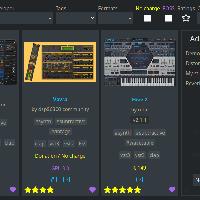
Help Linux musicians to quickly and easily find the tools they need
Showcase good quality software
Promote developers/companies that support Linux
Play and experiment with modern web technology