240 private links


Internet Cinema Loop
w/ Open Secret, Mawena Yehouessi, 0nty, Redacted Cut, Aemmonia, Eliska Jahelkova, Carmen Lin, Machine Yearning

What do people use to keep track of visual references?


Users want systems that provide confident answers to any question. Evaluation benchmarks reward systems that guess rather than express uncertainty. Computational costs favour fast, overconfident responses over slow, uncertain ones.

magic palette paint software


Les propositions de réflexions ci-dessous ont été développées à la destination principale des étudiant·es de 2e année Design graphique multimédia.
Elles s’inscrivent dans une proposition plus large visant à amorcer une approche critique du design des nouveaux médias :
appréhender la diversité des cultures numériques et des liens qu’elles entretiennent avec le design ;
construire un regard critique sur les pratiques numériques contemporaines ;
développer l’approche documentaire, la méthodologie de recherche, la capacité de synthèse et de retransmission.
Ce cours propose aux étudiants de développer leur regard et leur connaissance du monde de la création et du design numérique. Dans des champs aussi variés que le design d’interface, la typographie, les pratiques artistiques ou expérimentales, la critique et la pensée des médias, l’analyse des usages émergents ou l’histoire du design numérique, les étudiant·es sont amené·es à découvrir et à s’approprier la diversité des pratiques numériques contemporaines dans les champs de l’art et du design.
La bonne appropriation de ces questions ne va pas sans un aiguisage sérieux de l’esprit critique. Les espaces de réflexion ouverts sont donc – de manière pleinement assumée et affirmée – ancrés dans les questions politiques qui animent le monde contemporain.
The rise of climate denialism in the general population (
5% between 2019 and 2023) has been accompanied by a very significant increase in denialist activism on “X”/Twitter since the summer of 2022, and increased hostility towards climate scientists.
Through global tracking of Twitter exchanges about climate change between 2019 and 2023, as well as exchanges about COVID-19 pandemics, we analyzed this online trend and its interaction with other societal issues like politics and COVID-19 pandemics.
Beyond fact-checking, we show, through complex networks and semantic analyses, that there are structural differences between these denialist and pro-climate online communities, as well as between the circulation of false information and other climate change-related narratives.
All the evidence suggests that the behavior of deniers is designed to deceive, and that they are over-represented on social networks compared to what they actually represent offline. This is particularly true on “X”/Twitter since Musk’s takeover.
We have also highlighted the globalized aspect of this new denialism, its alignment with the interests and visions of powers such as Russia and how it has benefited from the COVID-19 pandemic.
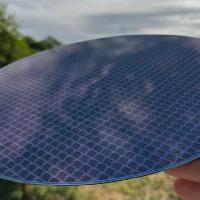
Now that all the pieces are in place, here is the economic nexus of semi/genAI that particularly interests me:
If model providers make inference much more efficient, then they will not use enough computing power to consume all that is brought to market by the semiconductor industry. If this happens, it will trigger a downward cycle in this industry, significantly slowing down the production of new hardware and possibly having significant global economic and financial repercussions.
If model providers do not make their inference processes more efficient, they will not be able to structurally reduce their marginal costs and, failing to achieve the desired profitability, will resort to the usual means (advertising, tiered subscriptions), which will slow down adoption.
If adoption slows down, model providers will struggle to achieve profitability (with the exception of those with captive markets), their demand for computing power will weaken, and the semiconductor industry will produce excess capacity and enter a downward cycle, taking part of the AI industry with it.
So, the central issue linking today’s semiconductor industry and genAI model providers is how to define how much efficiency gains are enough. Jokingly, we could call this ‘inference inefficiency optimum’.
Under the banner of progress, products have been uncritically adopted or even imposed on users — in past centuries with tobacco and combustion engines, and in the 21st with social media. For these collective blunders, we now regret our involvement or apathy as scientists, and society struggles to put the genie back in the bottle. Currently, we are similarly entangled with artificial intelligence (AI) technology. For example, software updates are rolled out seamlessly and non-consensually, Microsoft Office is bundled with chatbots, and we, our students, and our employers have had no say, as it is not considered a valid position to reject AI technologies in our teaching and research. This is why in June 2025, we co-authored an Open Letter calling on our employers to reverse and rethink their stance on uncritically adopting AI technologies. In this position piece, we expound on why universities must take their role seriously to a) counter the technology industry's marketing, hype, and harm; and to b) safeguard higher education, critical thinking, expertise, academic freedom, and scientific integrity. We include pointers to relevant work to further inform our colleagues.


In the aftermath of nuclear apocalypse, a group of people are forced to live underground in bunkers. They cannot go outside their dwellings without wearing protective clothing and gas masks. They try to find hope in the disturbing new world. Among these people is a scientist who writes and recites letters to his son, who is missing and most likely dead.


Typeface from Titus Kaphar / Reginald Dwayne Betts’ show at MoMA PS1
Chawan is a TUI web (and (S)FTP, Gopher, Gemini, ...) browser with CSS, inline image and JavaScript support.
It uses its own small browser engine developed from scratch, which can nevertheless display many websites in a manner similar to major graphical browsers.
It can also be used as a terminal pager.



Many chefs I know get upset at me when I tell them this. But this is the truth: If you can’t cook everything you make in a microwave thats a skill issue. You need to learn now because when everything is cooked in a microwave you’ll be out of a job. When microwaves are everywhere you’ll be so far behind you’ll never learn how to use a microwave. Chefs who use tools besides microwaves are luddites. They live in fear of the future.
The back and forth over the energy consumption of consumer AI is interminable. Researchers regularly update the predicted costs, AI luminaries (like Sam Altman) counter with internal figures but decline to explain how they were calculated, lay people chime in with cocktail napkin calculations (to which I won’t bother linking), and commentators conclude that there are actually more interesting things to talk about.
But there’s a relatively easy way to cut through all that noise. Instead of meekly asking AI companies for transparent data, we can take stock of how much energy they expect to use by looking at where they’re putting their money.




Grok Companion Extracted Params


This is a chumbox. It is a variation on the banner ad which takes the form of a grid of advertisements that sits at the bottom of a web page underneath the main content. It can be found on the sites of many leading publishers, including nymag.com, dailymail.co.uk, usatoday.com, and theawl.com (where it was “an experiment that has since ended.”)
The chumboxes were placed there by one of several chumvendors — Taboola, Outbrain, RevContent, Adblade, and my favorite, Content.ad — who design them to seamlessly slip into a particular design convention established early within the publishing web, a grid of links to appealing, perhaps-related content at the bottom of the content you intentionally came to consume.

distorts fonts
Bitsavers'
Software Archive
Computing Archive
Communications Archive
Components Archive
Magazine Archive
Test Equipment Archive

AI can be kind of useful, but I'm not sure that a "kind of useful" tool justifies the harm.